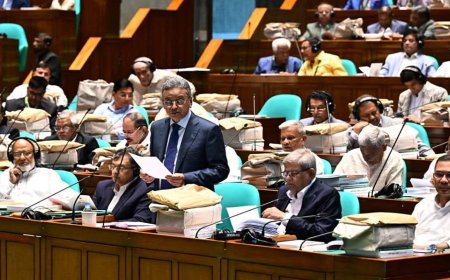







































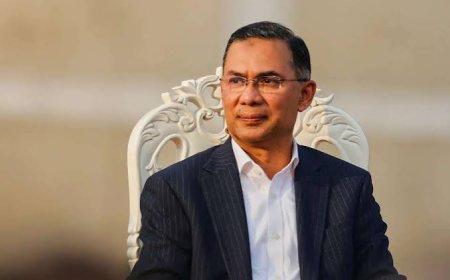

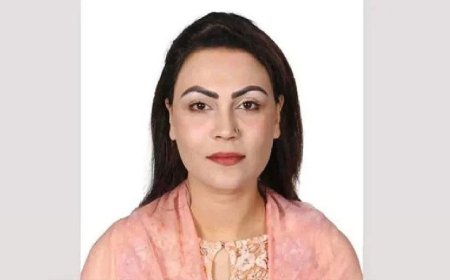

There is no provision for holding a referendum in Bangladesh’s Constitution, said Adviser Amir Khasru Mahmud Chowdhury
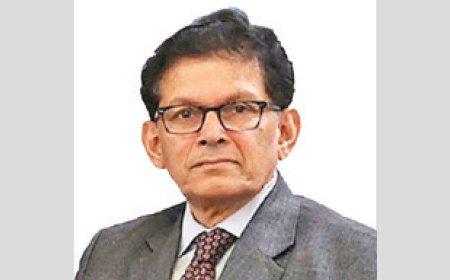
There is no provision for holding a referendum in Bangladesh’s Constitution, said Adviser Amir Khasru Mahmud Chowdhury.

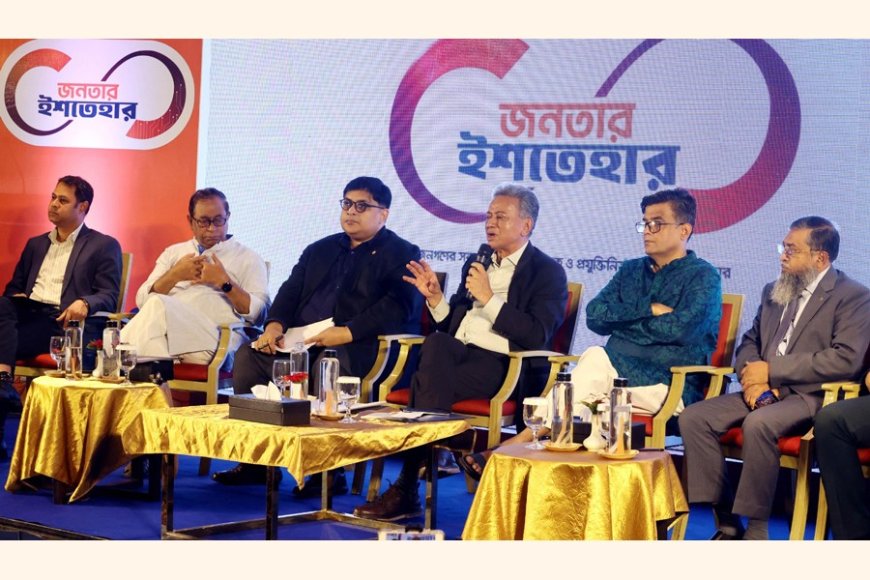
BNP Standing Committee Member Amir Khasru Mahmud Chowdhury said on Saturday that Bangladesh’s existing Constitution does not contain any provision for holding a national referendum.
“If a referendum is to take place, it can only be done after securing the people’s mandate, entering parliament, and passing the required legislation,” he explained.
Khasru urged all political parties to avoid unnecessary street confrontations, stressing that the people of Bangladesh desire peace and stability, not renewed conflict.
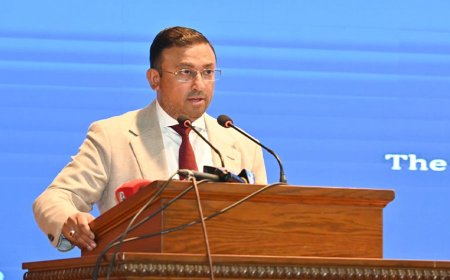
Speaking at a seminar titled “The Role of Political Parties in Developing Technology-Based Election Manifestos,” held at a city hotel, he said, “Everyone has the right to protest. But if one group takes to the streets and another responds in the same way, clashes are inevitable. Did we remove Sheikh Hasina only to fall back into confrontation again?”
The discussion was moderated by Dr Shahab Enam Khan, Executive Director of the Bangladesh Centre for Indo-Pacific Affairs, and chaired by Fuad M Khalid Hossain, CEO of Trace Consultancy, which organised the event.
Other speakers included Chief Adviser’s Press Secretary Shafiqul Alam, Biplobi Workers Party General Secretary Saiful Haque, and DUCSU VP Sadiq Kayem.
Although Khasru did not name any party, his remarks were widely interpreted as a response to recent street programmes by Jamaat-e-Islami, which has been demanding a national referendum and other pre-election conditions.
BNP leaders have criticised such movements as attempts to derail the upcoming national elections.
Sharing the stage with Jamaat Assistant Secretary General Hamidur Rahman Azad, Khasru said many political actors have become “fixated on imposing their own agendas.”
“Political parties must honour the consensus already achieved. Creating new issues beyond that reflects a lack of respect for that consensus,” he said.
He further noted that after 17 years under Sheikh Hasina’s rule, an authoritarian mindset had taken root among many politicians.
“Some believe that if their demands or ideas aren’t accepted, the entire process loses legitimacy. That mentality must change,” he said, emphasising unity and mutual respect as the foundation of political engagement.
Khasru warned that some groups might be attempting to delay the election by raising issues like a national referendum or exploiting recent incidents of violence in Chattogram.
During the same event, Khasru unveiled a portion of BNP’s forthcoming election manifesto, pledging to create 10 million jobs within the first 18 months if the party comes to power.
“The new generation needs opportunities, not slogans,” he said. “We have a detailed plan to generate employment across various sectors, particularly through technology, small enterprises, and export-oriented industries.”
He added that ensuring a free, fair, and peaceful election was more important than the manifesto itself.
“How many people actually read manifestos before voting? What matters most is restoring democracy and the people’s right to vote,” Khasru said.
Shafiqul Alam, meanwhile, urged political parties to prioritise education, healthcare, and other fundamental issues to improve the people’s socio-economic well-being.
What's Your Reaction?