

























































Key economic priorities the new government should focus on
Key economic priorities the new government should focus on

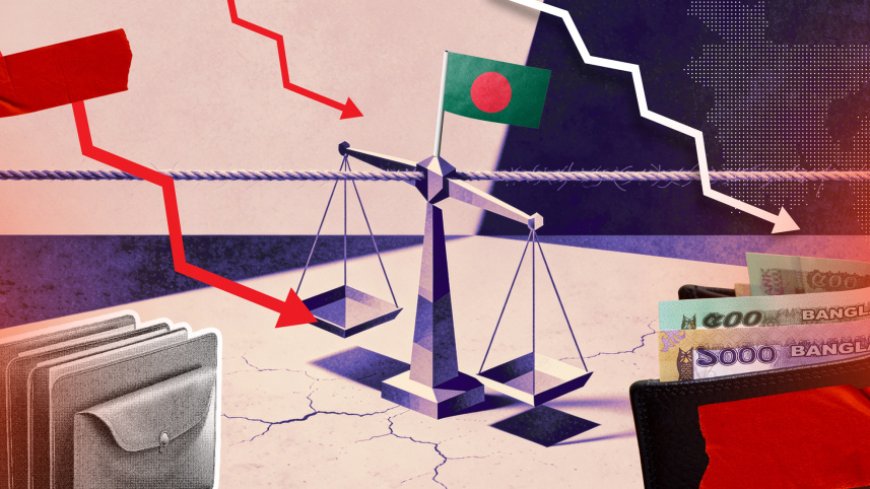
The newly elected BNP government has inherited an economy beset by multiple and interconnected challenges. Persistent inflationary pressures, sluggish private investment, and rising unemployment must be addressed simultaneously through careful and coordinated policy planning. Alongside these macroeconomic concerns, the country’s long-standing weakness in domestic resource mobilisation demands urgent policy attention. Restoring macroeconomic stability in the face of these challenges should therefore be the government’s foremost priority.
In the aftermath of the July 2024 uprising, the interim administration’s most pressing economic task was to rein in double-digit inflation, which had climbed to 11.66 percent in July 2024. Through contractionary monetary and fiscal measures, inflation was brought down to the 8–9 percent range. According to the January 2026 data from the Bangladesh Bureau of Statistics, point-to-point inflation stood at 8.58 percent, with food inflation at 8.29 percent and non-food inflation at 8.81 percent. However, given the downturn in private investment and employment generation, the continued reliance on tight monetary and fiscal policies may no longer be sustainable. The new government should therefore pursue a more balanced policy mix, combining prudent monetary management with stronger market oversight. This includes ensuring competitive market conditions, curbing collusive practices and hoarding, improving the availability of demand and supply data, enhancing coordination among relevant authorities, reducing import delays at ports, and strengthening overall supply chain management.
From a broader economic management perspective, weak private sector investment remains a major obstacle, dampening GDP growth and job creation. Bangladesh Bank data show that private sector credit growth fell to just 6.49 percent in FY2024–25. This decline stems from a range of factors, including infrastructural bottlenecks, high borrowing costs, and the elevated cost of doing business. Political uncertainty during the period without an elected government also contributed to slowing industrialisation. Ensuring policy stability and creating a business-friendly environment should therefore be central to the new government’s agenda.
Unemployment and the economy’s limited absorptive capacity represent another critical concern. Reduced public and private investment under contractionary policies has constrained job creation. At the same time, employment elasticity of growth remains low—0.34 overall—and was even negative in the manufacturing sector (-0.05) between 2016–17 and 2022. Youth unemployment stands at 8.07 percent, while 20.3 percent of young people are classified as NEET (not in education, employment, or training). Unemployment among tertiary-educated individuals is particularly high at 13.54 percent, compared with the national average of 3.66 percent, according to the Labour Force Survey 2024.
Addressing these labour market challenges requires a multifaceted strategy. The government should prioritise expanding the Cottage, Small and Medium Enterprises (CSME) sector by ensuring access to affordable credit, strengthening market linkages, and designing supportive sector-wide policies. Boosting private investment and large-scale industrialisation must go hand in hand with promoting industry-academia collaboration to reduce skill mismatches. Establishing start-up funds for young entrepreneurs and freelancers, as well as modernising technical and vocational education, should also form part of a comprehensive employment strategy.
Beyond macroeconomic management, persistently low domestic resource mobilisation remains a structural weakness. The tax-to-GDP ratio—below seven percent in FY2024–25—is among the lowest globally. This constrains government spending in critical sectors such as education, healthcare, and social protection. Strengthening revenue collection through enhanced direct taxation and digitalisation of the tax system is essential. Expanding the tax base to include all eligible taxpayers will be a complex task, but it must be pursued decisively while safeguarding against inflationary and inequality pressures.
Although Bangladesh made notable progress in poverty reduction between 2010 and 2022, the pace slowed after 2016, and recent estimates suggest a possible reversal. Around one-third of the population remains vulnerable to falling below the poverty line. Income inequality has also widened, with the richest decile accounting for 40.92 percent of total income, according to the Household Income and Expenditure Survey 2022. These trends are particularly concerning in the context of LDC graduation and evolving global economic pressures.
Against this backdrop, the BNP government—having secured a landslide victory in the February 12 election—must prioritise containing inflation, revitalising private sector investment, generating decent and productive employment, and strengthening domestic resource mobilisation. Reviving the rural economy, ensuring transparent and adequate allocation for social safety net programmes, and implementing a progressive and equitable tax system will be crucial to reducing inequality and promoting inclusive growth. With strong political commitment and timely, well-coordinated policy action, the government can navigate these formidable challenges and lay the foundation for sustainable and inclusive development.
What's Your Reaction?