



































NOAB to hold nationwide journalists’ conference in mid-January
Editors’ Council–NOAB protest meeting calls for united resistance against mob violence
Protesting recent attacks, vandalism, arson and looting targeting media outlets, as well as the harassment of Editors’ Council President Nurul Kabir, the Newspaper Owners’ Association of Bangladesh (NOAB) has announced plans to hold a nationwide journalists’ conference in mid-January.
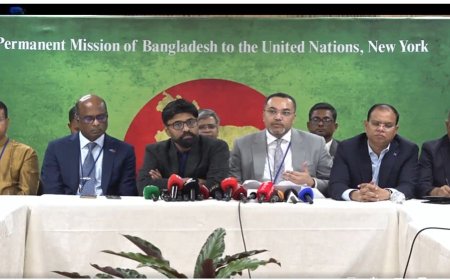
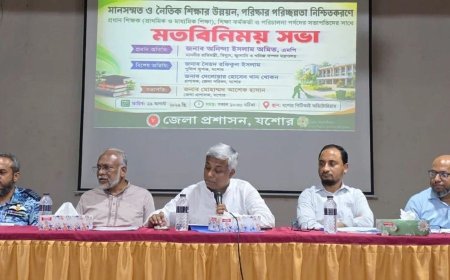
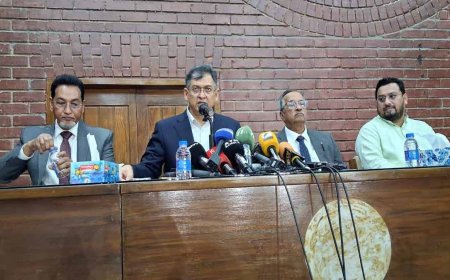
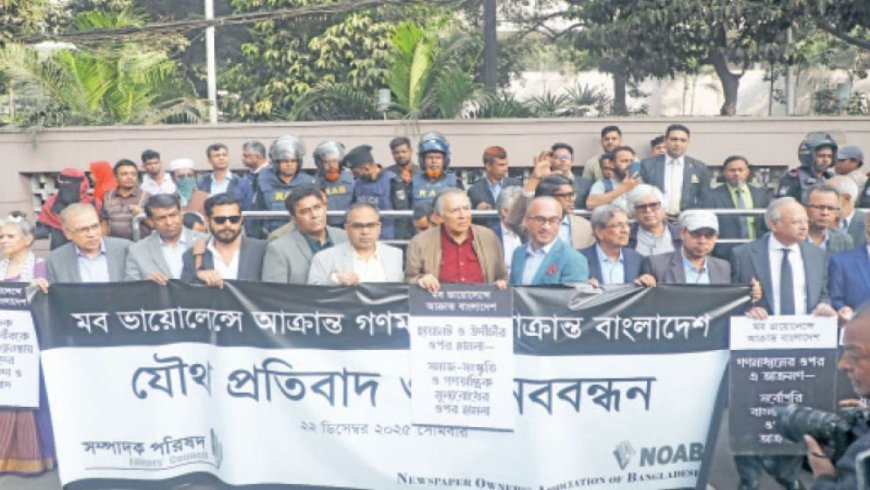
NOAB President AK Azad made the announcement on Monday while presiding over a protest meeting titled “Bangladesh under Attack of Mob Violence”, jointly organised by the Editors’ Council and NOAB at a city hotel.
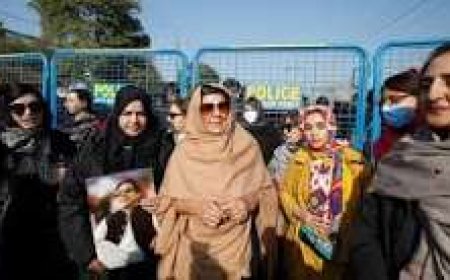
The meeting drew participants from across society, including leaders of political parties, professional and business bodies, journalist organisations and civil society representatives, who expressed solidarity against the attacks. BNP Secretary General Mirza Fakhrul Islam Alamgir was among those present.
Speakers condemned the attacks on Prothom Alo and The Daily Star, as well as on cultural organisations Chhayanaut and Udichi, describing them as assaults on democracy, culture and the core values of the nation.
Following the meeting, participants formed a human chain along Kazi Nazrul Islam Avenue in front of the Pan Pacific Sonargaon hotel.
In his address, AK Azad called for unity to resist such incidents, saying, “Our voices cannot be silenced. Based on the opinions expressed here, we will organise a conference with journalists from across Bangladesh in mid-January, from where our next course of action will be announced.”
He said the movement would continue until those responsible for setting fire to the organisations are brought to justice and journalists are guaranteed freedom of expression.
Referring to the attacks on the two newspapers, Azad said that after the attack on Prothom Alo, The Daily Star Editor Mahfuz Anam had sought protection from various government agencies and individuals, but received no response.
Miscreants attacked the offices of Prothom Alo and The Daily Star on Thursday night, shortly after news of the death of Inqilab Moncho spokesperson Sharif Osman Bin Hadi spread. The attackers vandalised, torched and looted the offices, while Editors’ Council President Nurul Kabir was also harassed.
On the same night, the miscreants attacked Chhayanaut, followed by an attack on the Bangladesh Udichi Shilpigoshthi office the next day.
‘They wanted to burn people alive’
Editors’ Council President Nurul Kabir, also editor of New Age, said the attackers intended to kill people inside the media houses.
“When everyone was working in the office, they set fires from all sides. They wanted to burn people to death in a medieval manner by obstructing the fire service,” he said.
He warned that while media outlets may follow different editorial policies, setting them on fire is not part of any democratic process. “If such violence is not stopped, not only newspapers but the entire social system and prospects for development will be endangered.”
Right to life under threat
The Daily Star Editor and Publisher Mahfuz Anam said the issue now goes beyond freedom of expression to the fundamental right to life.
Recalling the attack, he said 26–27 colleagues were trapped on the roof while the fire brigade was prevented from entering. “This shows they did not come merely to burn a building — they came to kill journalists,” he said, calling for unity and collective resistance against mob violence.
Allegations of complicity
National Citizen Party (NCP) Convener Nahid Islam alleged that sections of the interim government, backed by long-term social engineering and political support, were behind the attacks.
“The violence was planned, not spontaneous. The perpetrators exploited the slogans of the July uprising and the death of Osman Hadi to legitimise their actions. Without government involvement, social consent and political backing, this would not have been possible,” said Nahid, a former information minister.
He said attacks on media houses would not be allowed in the name of the July uprising.
Transparency International Bangladesh (TIB) Executive Director Dr Iftekharuzzaman accused the interim government of silence, saying, “Mobocracy has taken root at the heart of the state, even inside the Secretariat. Those in power now view these forces as pillars of their authority.”
Former caretaker government adviser Rasheda K Chowdhury highlighted the targeting of educational and cultural institutions, questioning why organisations like Chhayanaut were attacked. Naripokkho founder Shireen Huq condemned the government’s inaction.
Bangladesh Jamaat-e-Islami Assistant Secretary General Ahsanul Mahboob Zubair described the attacks as unacceptable and demanded justice, while Nagorik Oikya President Mahmudur Rahman Manna and Ganosamghati Andolon Chief Coordinator Zonayed Saki called the violence “planned” and warned that using the July uprising to justify attacks undermines the government’s legitimacy.
Renowned photographer Shahidul Alam, barrister Sara Hossain, human rights activist Rehnuma Ahmed, and representatives of various political, journalistic, business and civic organisations also spoke at the event.
Speakers unanimously stressed that united resistance by journalists, writers, intellectuals and professionals is essential to safeguard media freedom and strengthen democracy.
What's Your Reaction?