













































Election exodus quiets Dhaka streets ahead of landmark polls
Passengers said fares that usually cost Tk500 were being hiked to between Tk1,200 and Tk1,500.

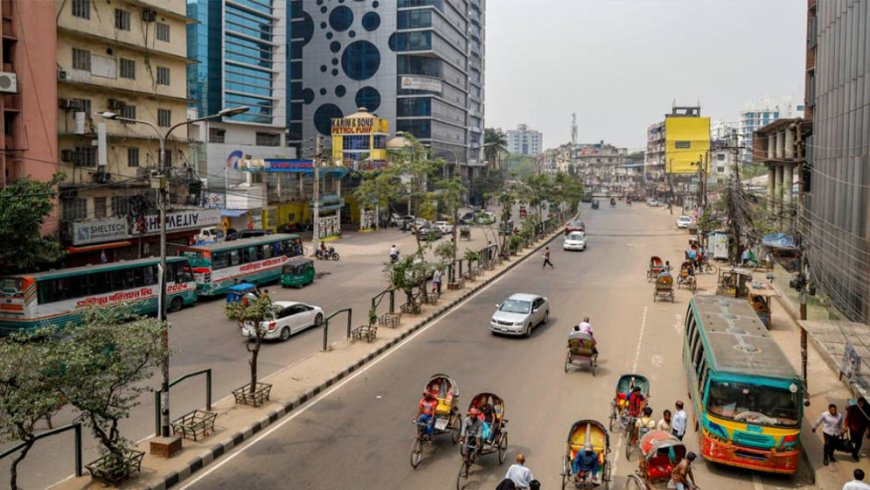
Dhaka is experiencing an unprecedented outflow of people as residents leave the capital in large numbers to return to their hometowns ahead of the 13th National Parliamentary Election and Referendum, now just two days away.
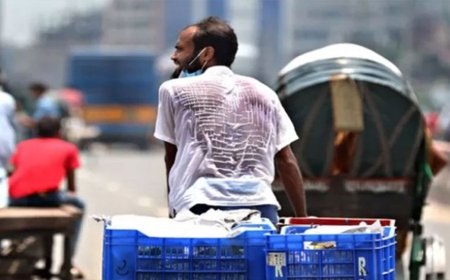
The scale of the pre-election rush was evident across the city on Tuesday. Typically congested roads appeared unusually calm, with traffic volumes sharply reduced. Public transport services within Dhaka were operating at limited capacity, compounding difficulties for regular commuters.
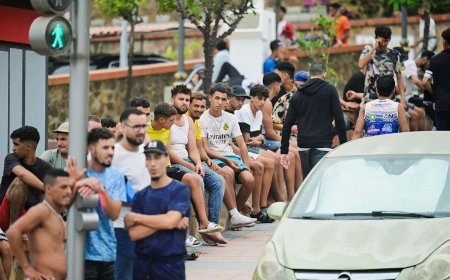
Meanwhile, major transport hubs—Kamalapur Railway Station, Gabtoli Bus Terminal, and Mohakhali Bus Terminal—were overwhelmed with outbound यात्रियों carrying luggage, while office-goers struggled to find buses for their morning journeys.
Journalist Zahid Hasan described the situation: “There are hardly any public buses on the roads. Bus stops are overcrowded, and people are waiting for long periods. When one or two buses do arrive, getting on is extremely difficult.”
The rush extended well beyond the city. Heavy outbound traffic was reported on the Dhaka–Aricha, Dhaka–Mymensingh, and Dhaka–Chattogram highways throughout the day. In some cases, passengers unable to secure train or bus tickets resorted to travelling on train rooftops or in trucks to reach their hometowns in time to vote.
The mass departure has been fuelled by government-declared election holidays, combined with school holidays that began on Tuesday and will continue until 15 February. Together, these breaks have accelerated the movement of people out of the capital, leaving Dhaka unusually quiet in the days leading up to polling.
Law enforcement agencies have been deployed at key bus terminals, railway stations, and highway bottlenecks to manage crowds and maintain order. Even so, the sheer scale of the voter movement highlights both the logistical strain and the high level of public engagement expected in the election.
The exodus has also severely affected Gazipur, a major industrial hub, where the announcement of a continuous four-day holiday triggered a surge of homebound workers. As a result, extraordinary traffic congestion—stretching nearly 50 kilometres—formed along the Dhaka–Tangail and Dhaka–Mymensingh highways.
Transport operators have been accused of exploiting the situation by charging excessively high fares. Visits to the Dhaka–Tangail and Dhaka–Mymensingh highways on Tuesday morning (10 February) revealed severe congestion, with passengers reporting that fares normally set at Tk500 were increased to between Tk1,200 and Tk1,500. In protest, some travellers briefly blocked the road in the Chandana Chourasta–Mawna area of Gazipur.
Long tailbacks were seen on the Dhaka–Mymensingh highway from Tongi College Gate to Mawna Chourasta, and on the Dhaka–Tangail highway from Bhogra in Gazipur to the Kaliakair Bypass, with vehicles stranded for hours in several locations.
The situation intensified from Monday afternoon, after more than 400 industrial factories across Gazipur announced holidays, prompting a steady stream of workers to begin their journeys home from the evening onward.
What's Your Reaction?