








































Govt releases book highlighting key reform initiatives
Govt releases book highlighting key reform initiatives

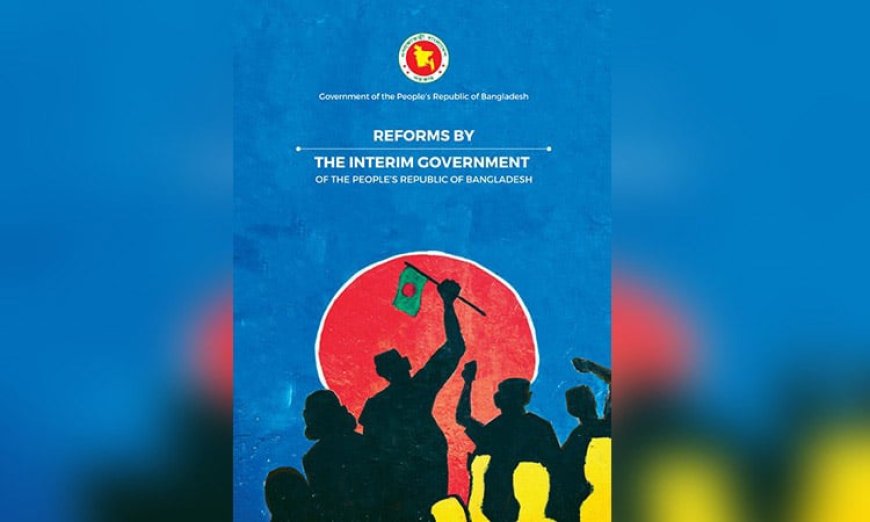
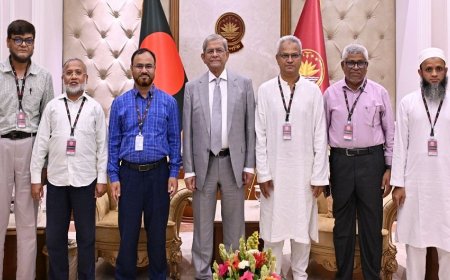
The government has released a book titled “Reform Book”, outlining the key reform initiatives undertaken by the interim government since August 2024, according to the Chief Adviser’s Press Wing.
Providing the context of the reforms, the press wing said Bangladesh began emerging from nearly 16 years of authoritarian-style rule on August 5, 2024, following mass protests led largely by young people who took to the streets demanding an end to repression. The July Uprising paved the way for an interim government headed by Professor Muhammad Yunus, formed amid a deep national crisis marked by economic collapse, institutional decay, and democratic erosion.
The interim administration inherited a state weakened by years of corruption and misgovernance. Vast sums had been siphoned from public institutions, the banking sector was crippled by soaring non-performing loans, and key regulatory bodies—including the central bank—had fallen under political and private influence. Law enforcement had been used for repression, the judiciary had lost its independence, elections were rendered meaningless, and media freedom and civil society space had largely vanished.
From this breakdown, the press wing said, the interim government—working with citizens across sectors—launched a broad process of transformation. Soon after assuming office, it formed expert-led Reform Commissions to recommend sector-specific changes. Based on these recommendations and its own initiatives, the government introduced wide-ranging legal and institutional reforms feasible within its tenure.
Over the past 18 months, the interim government has enacted around 130 laws and taken more than 600 executive decisions. About 84 percent of these measures have already been implemented, reflecting substantive reforms rather than symbolic changes.
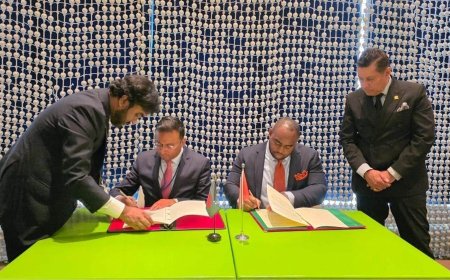
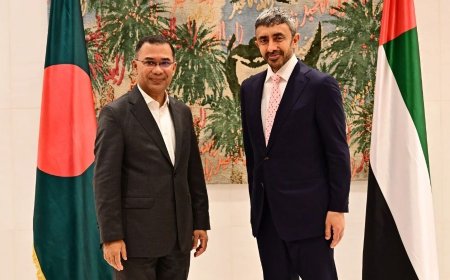
Significant progress has been made in the economy and foreign relations. New trade agreements have diversified partnerships, including an Economic Partnership Agreement with Japan granting duty-free access to nearly 7,400 Bangladeshi products. Cooperation with China has extended loan maturities, supported major healthcare projects, and improved flood forecasting through shared data. Talks with the United States reduced reciprocal tariffs from 37 percent to 20 percent, while diplomatic ties with key partners—including India—have been recalibrated on more balanced terms.
Accountability measures have also begun, with anti-corruption cases filed against hundreds of former politicians and officials and billions of dollars in assets frozen or seized. Banking oversight has been strengthened, procurement transparency expanded across 42 ministries, and the Bangladesh Bureau of Statistics granted full autonomy.
Reforms in law enforcement have restored a measure of discipline, with over 1,200 officers suspended pending investigation and human rights–focused training introduced widely. Special commissions have collected testimonies from thousands of victims, initiating a long-delayed process of truth and accountability. The Rapid Action Battalion has been restructured and renamed the Special Intervention Force.
Judicial independence has been reinforced through structural reforms placing all courts under Supreme Court administration and introducing merit-based appointments for judges. Media freedom has been restored by dropping politically motivated cases against journalists and allowing previously banned outlets to resume operations.
Throughout the transition, the interim government conducted inclusive political dialogue, culminating in the July Charter—a foundational document for proposed constitutional reforms now awaiting approval through a referendum. The charter aims to strengthen fundamental rights, checks and balances, and safeguards against a return to authoritarian rule.
While noting that the reforms are only the first steps and that the damage of 16 years cannot be undone in 18 months, the press wing said Bangladesh has decisively turned away from authoritarianism, guided by the same public courage that drove the July–August 2024 movement toward a democratic future.
What's Your Reaction?