































































FAO: 10 lakh farm households urgently need agricultural assistance
FAO: 10 lakh farm households urgently need agricultural assistance

Around 10 lakh agricultural households, representing nearly 50 lakh people, are estimated to require emergency agricultural assistance in Bangladesh between June and November 2026, according to the latest assessment by the Food and Agriculture Organization of the United Nations (FAO).
The figure is 2 lakh higher than the 8 lakh households identified as needing emergency agricultural assistance in the FAO’s September 2025 assessment.
The findings are based on the FAO’s 14th round of Data in Emergencies Monitoring (DIEM-Monitoring), which assessed emergency agricultural needs through computer-assisted telephone interviews with 6,143 households conducted between April 20 and May 27. The survey covered all eight divisions and 64 districts.
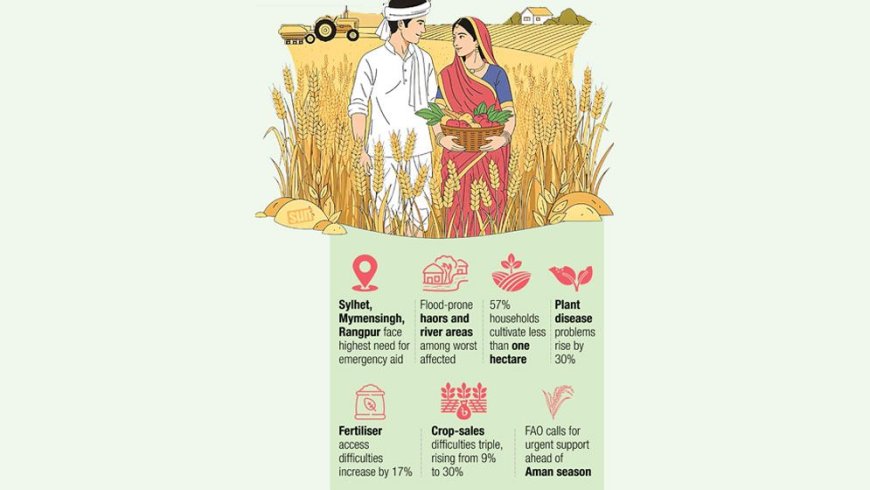
The assessment found that Sylhet, Mymensingh and Rangpur had the highest proportions of agricultural households requiring emergency assistance. In absolute numbers, Chattogram and Rangpur had the largest estimated populations in need, followed by Dhaka, Rajshahi, Mymensingh, Khulna, Sylhet and Barishal.
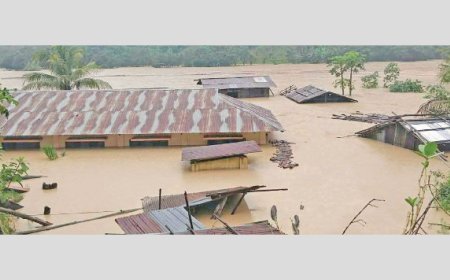
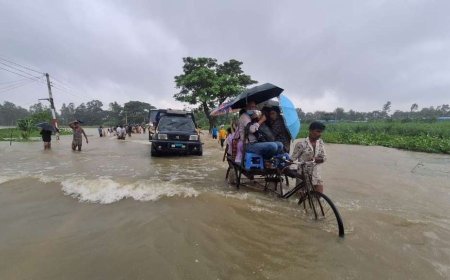
The situation was particularly acute in riverine areas, haors and flash-flood-prone locations, where exposure to flooding and waterlogging increased as the monsoon intensified.
According to the FAO, households requiring assistance were disproportionately made up of resource-poor smallholders. About 57% cultivated less than one hectare of land, while 60% fell within the lowest wealth tercile.
Their reliance on casual agricultural labour, casual off-farm work and low-capital self-employment further constrained their ability to finance farming activities and withstand economic and natural shocks.
Economic shocks affected 84% of households in need, while 16% reported exposure to natural hazards — six percentage points higher than in the previous assessment.
Financial pressures were also evident in household coping mechanisms. Around 67% said they purchased food on credit, 66% reduced health-related spending and 30% cut expenditure on agricultural inputs.
The FAO warned that reduced spending on inputs could weaken households’ ability to purchase seeds, fertiliser, feed and other essential inputs, potentially affecting future production and incomes.
Crop producers also reported worsening production and marketing challenges. Plant disease-related problems rose by 30 percentage points, while difficulties accessing fertiliser increased by 17 percentage points.
At the same time, the proportion of households facing difficulties selling crops jumped from 9% in the previous assessment to 30%, largely because of low market prices.
The assessment found that many households continued to rely on unstable and irregular income sources. Casual off-farm labour was the most common primary source of income, while only about 16% of households in need identified crop, livestock or fisheries production as their main income source.
Income pressures were significant, with 33% reporting that their main income was lower than it would typically be during the same period.
Crop inputs remained the top assistance priority, cited by 72% of households requiring support.
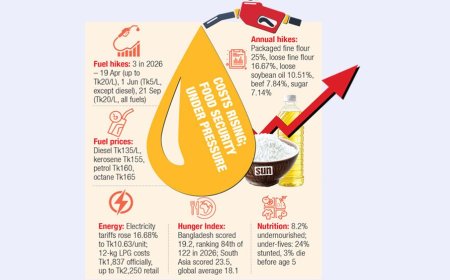
Demand for cash assistance, however, surged from 16% to 57%, marking a 41-percentage-point increase from the previous assessment. The FAO said the rise may reflect acute seasonal pressures linked to recent shocks, including monsoon flooding, food inflation and declining household incomes.
Livestock feed was identified as a priority by 51% of households, while 33% reported a need for veterinary services.
The FAO said the findings highlight the need for a seasonally targeted assistance package ahead of the Aman cultivation period. Such support should combine crop inputs with cash assistance, animal-health services and water-management measures.
The agency also recommended greater investment in drainage, storage, aggregation and market access to help protect the upcoming Aman crop, reduce post-harvest losses and enable farmers to secure better returns.
What's Your Reaction?