


















































Moving from Capital to Capability
Can Chinese investment help Bangladesh develop skills, strengthen local suppliers, and build globally competitive industries?

Three decades ago, nine out of every 10 people in Anwara’s Bairag union relied on farming and fishing in the Bay, says Nurul Alam, a resident of Guapanchak village. Then the Korean EPZ arrived, gradually bringing new employment opportunities. Now, another transformation is taking shape.
Where paddy fields stood just 18 months ago, nearly 800 acres have been cleared, with access roads now cutting through what was once a patchwork of farmland.
Bangladesh’s most ambitious dedicated industrial zone for Chinese investment is beginning to take physical form. For communities living nearby, the transformation is no longer an announcement on paper—it is visible on the ground.
“Once jobs open up at the China EPZ, boys and girls from here will be able to work without leaving their own area,” says Navidul Islam, a young man from the same village. He has watched an earlier generation travel to Chattogram city and other areas in search of jobs that were unavailable locally.
The zone officially broke ground on 27 July 2026, although its supporting infrastructure has an implementation period extending to December 2031. BEZA expects 60% of the plots to be ready for construction within three years.
After years of delays, the question is no longer whether the Chinese Economic and Industrial Zone in Anwara will be built. The bigger question is how quickly land will turn into factories, factories into supply chains, and supply chains into productive capacity.
More than 30 Chinese companies have reportedly committed around $500 million to the zone so far, according to the Chinese ambassador, with total investment eventually expected to surpass $1 billion.
BIDA Executive Member Nahian Rahman Rochi puts the zone’s overall investment target at around $1.3 billion, with the potential to generate more than one lakh jobs.
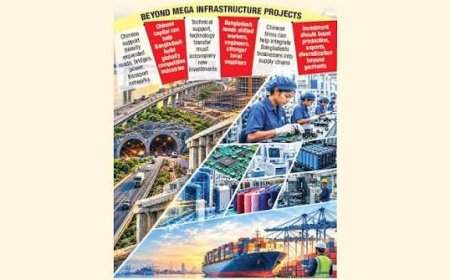
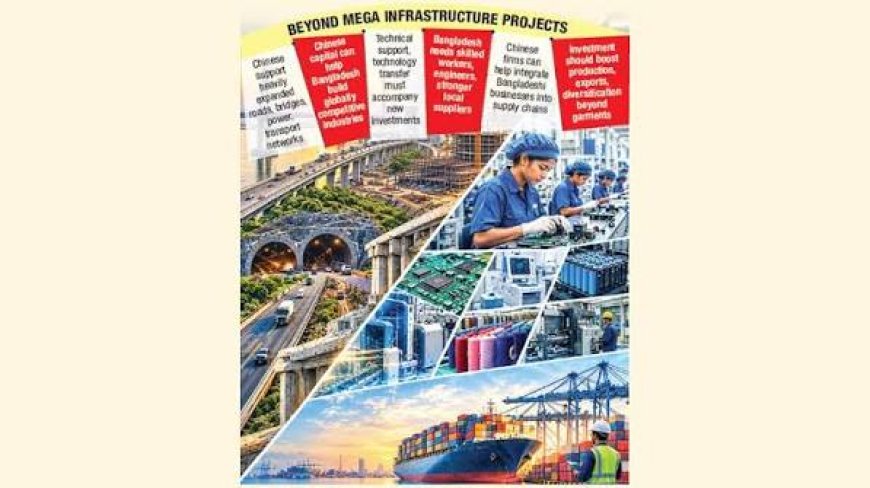
For years, the most visible symbol of China-Bangladesh economic ties was concrete and steel—roads, bridges, power plants, tunnels and railways.
That was the first phase. The emerging question is different: what can Chinese capital help Bangladesh produce?
That shift is beginning to emerge beyond Anwara.
The pipeline is already becoming industrial
Chinese companies accounted for nearly two-thirds of the new investment commitments secured by the Bangladesh Export Processing Zones Authority (BEPZA) in FY26. Of the $717.71 million secured from 36 companies, 23 Chinese-owned or joint-venture firms proposed investments worth $498.86 million.
The proposed projects cover electronics, drones, medical devices, logistics, light engineering, textiles, footwear, leather goods and processed food. The range marks a notable departure from the garment-and-textile-heavy profile that has characterised Chinese manufacturing investment in Bangladesh for the past two decades.
A similar pattern is emerging at BIDA. Of more than $400 million from a $1.5 billion investment pipeline for 2025 that has reached the decision or implementation stage, nearly $367 million—around 92%—came from Chinese companies.
Then came the headline figure from Prime Minister Tarique Rahman’s June visit to China: 12 Chinese companies proposed investments worth $9.21 billion across energy, infrastructure, logistics, manufacturing, environmental services and education.
The figure is striking. But it is not yet investment.
A relationship entering its second phase
Bangladesh and China marked 50 years of diplomatic relations last year. Over that period, economic cooperation expanded from trade into infrastructure financing, machinery and capital goods, with China eventually becoming Bangladesh’s largest trading partner.
The joint communiqué issued after the prime minister’s 22–26 June visit pointed towards a relationship broader than another round of infrastructure deals.
The two countries agreed to deepen cooperation in trade, e-commerce, and industrial and supply chains. China pledged continued support for Bangladesh’s industrialisation and agricultural modernisation, while Bangladesh welcomed zero-tariff treatment across 100% of Chinese tariff lines. Both sides also agreed to advance the Mongla Port Facilities Modernisation and Expansion Project alongside the Anwara development.
The visit also produced concrete follow-up. Bangladesh and China signed 13 memoranda of understanding on 25 June after talks between Tarique Rahman and Premier Li Qiang in Beijing.
China Road and Bridge Corporation was confirmed as the formal developer of Anwara, while separate agreements covered the proposed Teesta River project and the China-Myanmar Economic Corridor.
China’s Handa Group also secured land in the Keraniganj Economic Zone for a planned $220 million investment.
Taken together, these developments represent more than additional infrastructure. They signal an attempt to connect Chinese capital directly with Bangladesh’s factories, ports, economic zones and export industries at a time when the country has limited room for delay.
Bangladesh needs to diversify an export basket still dominated by garments, attract investment beyond its traditional base, create higher-productivity employment and prepare for a more competitive post-LDC environment.
Chinese capital could, in principle, contribute to all of these objectives—but only if it translates into production capacity rather than simply increasing the import bill under a different country-of-origin label.
Anwara: the test case
Nowhere will that proposition be tested more directly than Anwara.
If the zone develops as planned, it need not become another industrial estate filled with factories that could have been located anywhere. It could evolve into a cluster in which Chinese manufacturers, Bangladeshi suppliers, logistics companies and service providers reinforce one another.
That distinction matters.
An isolated factory creates jobs and output. A functioning industrial cluster can multiply those effects by generating demand for Bangladeshi packaging companies, engineering workshops, transport operators and component manufacturers outside the zone. It can also provide workers with a pathway from assembly-line positions into technical and supervisory roles.
That pathway is precisely what Navidul Islam says is still missing next door.
Most young men in the area, he says, have found some form of employment connected to the neighbouring Korean EPZ, “but opportunities for locals in senior and skill-based positions are still comparatively limited. More opportunities need to be given to locals in these positions.”
His expectation from the Chinese zone is specific: skills development should determine not only how many people are hired, but also the positions they can eventually occupy.
That concern is increasingly appearing in broader business-policy discussions. The BCCCI has proposed establishing technical and polytechnic institutes to develop the workforce required to support greater Chinese investment and industrial expansion.
The proposal highlights the gap between simply creating jobs and developing the skilled workforce necessary to move beyond basic assembly.
But none of this is automatic
Much will depend on which companies enter the zone, what they manufacture and how deeply they integrate into the surrounding economy.
The risk is that Bangladesh becomes primarily an assembly location, importing most components and exporting finished products.
Economists emphasise that an industrial cluster is more than a collection of factories sharing the same location. It develops when companies establish links through local suppliers, shared services, skilled labour and technology transfer.
Anwara remains an emerging industrial zone rather than a mature cluster. Its long-term success will depend on whether those linkages actually develop.
The $9.21 billion question
The scale of the proposed investments is difficult to overlook.
The pipeline includes $4.5 billion from Sichuan Road & Bridge Group for the Dhaka-Chattogram Highway PPP; $1.65 billion from Zhongxin Environmental Protection Group for e-waste recycling; $890 million from Shanghai SUS Environment for waste-to-energy plants; and $650 million from China Civil Engineering Construction Corporation for the Mongla Port Economic Zone.
Other proposals cover gas exploration, smart-meter production, cold-chain logistics, recycled textiles, lithium batteries, solar power, rolling-stock assembly, education and medicinal-herb cultivation.
The diversity is as significant as the total value. It suggests Chinese interest extending beyond garments and conventional infrastructure—provided the proposals ultimately become real projects.
BIDA officials have acknowledged that the figures were provided by the companies themselves and have not yet been independently verified.
A proposal becomes meaningful only after passing through a long chain: feasibility, approval, financing, land allocation, construction, production, exports and employment.
Bangladesh has seen investment announcements stall at several points along that chain.
The country has experienced this before, and at an even larger scale.
When Xi Jinping visited Dhaka in 2016, China announced an infrastructure and energy package of roughly $20 billion, alongside separate Belt and Road financing and joint-venture proposals. A decade later, only about half of that pipeline has actually been financed.
“Signing an MoU does not mean every project will eventually be implemented,” CPD distinguished fellow Mustafizur Rahman said, noting that several coal-fired power projects announced in 2016 were later cancelled after Beijing changed its financing priorities, while others remained stalled for years.
He also identified the Anwara zone as one of the projects affected by disputes over land acquisition and investment terms.
The caution is not purely historical. Bangladesh Power Development Board officials say 31 renewable-energy projects, most backed by Chinese investors and worth a combined $5 billion, were cancelled after the interim government took office in 2024.
The lesson is straightforward: the strength of this new push should ultimately be measured not by the value of announcements but by how many projects reach production.
The capability test
Even if every proposed dollar materialises, another question remains: what will Bangladesh retain after the ribbon-cutting ceremonies are over?
A factory that imports most of its inputs and exports finished products can still generate employment and foreign exchange. But a factory that trains Bangladeshi engineers, sources components locally and transfers technological know-how leaves behind something much harder to create from scratch: capability.
That distinction should be central to Bangladesh’s China strategy.
The questions should extend beyond how much China will invest:
-
How much will actually be produced in Bangladesh?
-
How many jobs will involve technical training?
-
How much will be sourced from local suppliers?
-
What technology and know-how will be transferred?
-
Will Bangladeshi companies become part of the supply chain?
These questions are particularly important in the sectors BIDA has identified as priorities—including electronics, semiconductors, medical devices, EV batteries, advanced textiles and IT-enabled services—where the gap between basic assembly and genuine industrial capability can be especially significant.
The China-plus-one test
Chinese manufacturers are increasingly diversifying production beyond China, and Bangladesh is competing with several Asian economies for that investment.
Vietnam offers one example of how foreign investment can be integrated into export-oriented manufacturing at a scale Bangladesh has yet to achieve outside garments.
The difference is evident in FDI stocks. As of September 2024, Chinese FDI stock in Bangladesh stood at $1.41 billion, compared with $30 billion in Vietnam, $24 billion in Indonesia, $22 billion in Myanmar, $19 billion in Cambodia and $12.66 billion in Thailand.
Ke Changliang, chief adviser of the Chinese Enterprise Association in Bangladesh, put the issue directly: “The business environment in Bangladesh is still not as good as Vietnam or Indonesia. That’s the main reason.”
Chinese officials elsewhere have pointed to another contrast: economic-zone approvals that can take roughly seven working days in China may require close to two years in Bangladesh.
Bangladesh nevertheless has important advantages, including a large workforce, a sizeable domestic market, proximity to major Asian markets and decades of experience in apparel manufacturing.
Investors also continue to identify weaknesses, including infrastructure bottlenecks, limited land availability, customs delays, energy reliability and skills shortages.
Chinese capital cannot resolve these constraints by itself. A rapid influx of factories could instead make those shortcomings more visible as investors compare Bangladesh directly with manufacturing locations such as Hanoi or Jakarta.
Not every Chinese investor views Bangladesh negatively.
Lee Wai Choong, managing director of a Chinese-owned furniture manufacturer in the Mirsharai Economic Zone, points to Bangladesh’s labour-cost advantage as a reason to invest and expand, while seeing potential for movement up the value chain if the country builds deliberately on that foundation.
Al Mamun Mridha, former BCCCI secretary general, takes a more critical view: “Countries like Thailand and Vietnam have aggressively promoted their economic zones to Chinese investors. Bangladesh has not done the same.”
He adds that while Bangladeshi institutions assist Chinese investors who approach them independently, that approach alone does not actively attract new investment.
The China opportunity is therefore also a test of Bangladesh’s own reform agenda.
The strategy Bangladesh never fully adopted
Why has Chinese interest translated into actual production only slowly?
One explanation is that Bangladesh has not always targeted the types of investment it needs.
M Masrur Reaz, chairman of Policy Exchange Bangladesh, points to a basic contradiction: Bangladesh has enjoyed duty-free access to China for thousands of products since 2020, yet exports have not increased as expected.
The challenge, he argues, is not simply market access but scale, productivity and competitiveness. Bangladesh must produce goods that Chinese consumers and businesses actually want to buy.
“Duty-free market access alone is not enough to increase exports,” Reaz told Daily Sun, adding that Bangladesh also needs the capacity to produce products that are in demand and competitive in the Chinese market.
That is where Chinese investment could become important—if Bangladesh deliberately targets sectors in which Chinese companies can bring capital, technology and supply-chain connections while also producing for export.
The opportunity is expanding as Chinese manufacturers seek production bases outside China amid shifting global supply chains and trade barriers.
“What’s needed now is to specifically identify the sectors in Bangladesh that have export potential in international markets and where Chinese investors may have an interest,” Reaz said.
The objective, therefore, is not simply to attract more Chinese investment. It is to attract investment capable of expanding Bangladesh’s productive and export capacity.
Building the institutional response
The government has begun developing an institutional response, with both a strategy and dedicated mechanisms.
“Chinese investment has become one of the largest sources of foreign investment in Bangladesh over the past five years,” BIDA Executive Chairman Ashik Chowdhury has said.
The figures support the growing importance of China. China ranked as Bangladesh’s second-largest source of private FDI between 2019 and 2024, after Saudi Arabia, with approximately $4.38 billion from mainland China and another $173 million from Hong Kong.
More recent Bangladesh Bank data provides another indication of the trend.
China was Bangladesh’s second-largest source of net FDI in 2025, accounting for more than 18% of total inflows—a six-year high—with cumulative investment approaching $2 billion.
The trajectory has been sharp. China was not even among Bangladesh’s top 10 investors in 2016, ranking 16th with a 1.6% share of FDI stock. By 2025, it had risen to third, holding nearly 10%, while its FDI stock increased more than sevenfold, from $241 million to almost $2 billion.
BIDA now counts around 510 Chinese companies operating across manufacturing, power, textiles, construction and trading.
Part of the explanation is straightforwardly commercial, says Mutual Trust Bank Managing Director Syed Mahbubur Rahman. Bangladeshi companies that once depended on European machinery are increasingly purchasing equipment from China, where comparable machinery is generally cheaper and quality has improved.
Chinese financing has also attracted interest because it is typically easier to access and carries fewer policy conditions than IMF-style lending, making it appealing to governments seeking capital for large-scale projects.
BIDA plans to establish its first overseas office in China. This will complement the China Relationship Desk and the Chinese-language “China Investment Gateway” already launched.
The office will be located in Guangzhou, according to BIDA Executive Member Nahian Rahman Rochi. The authority has also established a dedicated relationship-management mechanism for Chinese investors, moving beyond case-by-case assistance.
“This will allow us to respond faster to investor concerns and improve Bangladesh’s visibility in China,” Ashik Chowdhury said.
Prime Minister Tarique Rahman, speaking to Chinese business leaders at a BIDA seminar in Beijing in June, expressed a similar objective: “Our objective is simple. Chinese investors should not have to wait until they arrive in Bangladesh to receive support. We want to be closer to you, speak to you more regularly and help you move faster from interest to decision.”
Such measures may improve investor facilitation. But facilitation also needs to be distinguished from accommodation at any cost.
Bangladesh’s business community continues to point to issues including law and order, weaknesses in the banking sector and frequent changes to VAT and customs rules as significant deterrents.
Al Mamun Mridha has noted that the China office had been under discussion for some time before finally moving forward—a reminder that announcing a response and delivering it are not necessarily the same thing.
Mamun describes China’s engagement with Bangladesh as having developed in stages: first as a machinery supplier offering favourable credit, then through EPZ operations, textile machinery, garments, backward-linkage industries, power and infrastructure financing, and now increasingly through manufacturing itself.
That progression effectively represents the “second phase” visible in Anwara and the $9.21 billion investment pipeline.
Each stage has deepened the relationship, but none has guaranteed the next.
The irony inside the imbalance
There is a structural irony in the relationship.
China is Bangladesh’s largest trading partner, yet trade remains heavily tilted towards Chinese exports to Bangladesh, including machinery, raw materials, electronics, chemicals and fabrics.
Much of those imports, however, feeds Bangladesh’s own factories and export industries. The trade imbalance often cited as evidence of an unequal relationship therefore also contains the foundations of a different economic model.
If Chinese companies increasingly manufacture inside Bangladesh, source inputs locally and use the country as an export base, some goods currently imported could eventually be produced domestically.
More importantly, Chinese capital, market knowledge and supply-chain access could help Bangladesh increase exports to third-country markets.
That would represent a larger opportunity than import substitution alone.
From investor to creditor
There is another dimension to the relationship: China is becoming an increasingly important creditor as well as an investor.
Bangladesh owed Chinese lenders $7.83 billion at the end of FY25, according to Bangladesh Bank data. Of that amount, $3.37 billion was owed by private-sector companies, making China the largest private-sector creditor, with a 34.2% share of total private-sector external debt. That figure has risen sharply from $422 million in 2018.
The distinction is important.
Investment brings capital, technology and shared risk. Loans create repayment obligations regardless of whether an individual project performs as expected.
Masrur Reaz argues that Bangladesh should evaluate Chinese-funded projects based on their economic returns rather than simply their financing value.
The question is not whether Chinese lending is inherently problematic. Rather, it is whether borrowed funds are directed towards projects capable of generating sufficient value, exports, employment or productivity gains to justify the liabilities they create.
That makes the shift from investment to production important in another sense: projects ultimately need to generate enough value to support the obligations they create.
What the second phase will actually measure
Taken together, the signs point to a significant expansion of Chinese industrial engagement: Chinese companies are dominating new EPZ commitments, participating strongly in BIDA’s investment pipeline, Anwara is finally under construction, another China-linked zone is taking shape around Mongla, and Chinese manufacturers are being courted across sectors including electronics, batteries, medical devices and advanced textiles.
But the biggest number in the story—$9.21 billion—remains a promise rather than an outcome.
The real measure will appear somewhere less visible than a joint communiqué: in factories that open or remain on paper, in export figures that rise or stagnate, in Bangladeshi engineers who acquire genuine technical expertise rather than simply work alongside Chinese technicians, and in how much of the investment announced in Beijing this June ultimately survives the journey to production.
It will also be measured in whether young men like Navidul Islam are running sections of factory floors five years from now—or still watching the machinery from outside the gates.
Bangladesh has already experienced the first phase of its China partnership, measured largely in concrete and steel.
The second phase, if it materialises, will be measured in something harder to photograph—and harder to replicate without genuine industrial development.
The central question is no longer simply how much China is prepared to invest in Bangladesh.
It is what kind of economy Bangladesh intends to build with that investment—and whether, eighteen months from now, the answer can be seen in more than the changing skyline of Anwara.
What's Your Reaction?