

















































Yemen’s Houthis Seize Strait Vital to Global Shipping
Yemen’s Houthis Seize Strait Vital to Global Shipping


Yemen’s Iran-backed Houthis seized control of the country’s entire Red Sea coastline and captured three strategically important islands on Friday in a rapid offensive that strengthened their grip over a crucial shipping corridor linking Europe and Asia.
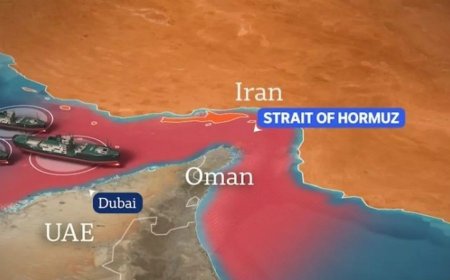
The advance is expected to further disrupt global trade and deepen the economic impact of the wider Middle East conflict, following months of Iran’s blockade of the Strait of Hormuz. Tehran welcomed the Houthi gains.
After a week-long offensive that has reportedly killed more than 500 people, Yemeni government officials said the Houthis had captured the Yemeni side of the Bab al-Mandab Strait, a key maritime gateway connecting the Red Sea with the Gulf of Aden and the Suez Canal.
A Saudi-backed government official said the Houthis had completed their takeover of the Bab al-Mandab area and Mayyun Island. A government military official later said the group had also captured Greater and Lesser Hanish islands, the last two islands in the narrow waterway that had remained outside Houthi control.
“Everything that was under our control on the western coast has fallen,” the official said.
A witness told AFP that armed Houthi fighters were deploying along the Bab al-Mandab shoreline and moving through the area in military vehicles.
The capture of Mayyun Island, which sits at the centre of the strait, could significantly strengthen the Houthis’ ability to threaten Saudi oil shipments. Saudi Arabia, the world’s largest oil exporter, has increasingly relied on Red Sea routes after Iran’s blockade of the Strait of Hormuz disrupted shipments through the Gulf.
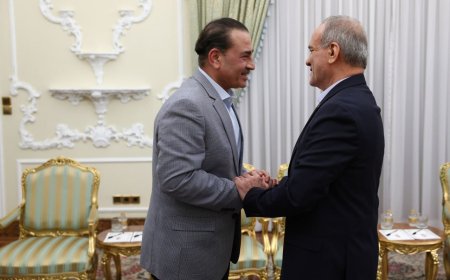
Iranian official Mohammad Mokhber congratulated the Houthis on what he described as a “resounding victory”.
Farea Al-Muslimi, a research fellow at Chatham House, said the developments meant Iran and its allies now had influence over both of the Middle East’s most strategically important maritime chokepoints.
Oil prices climbed above $100 a barrel this week, while average US diesel prices surpassed $6 a gallon for the first time on Friday, adding pressure on US President Donald Trump ahead of the midterm elections.
Houthi military spokesman Yahya Saree said navigation through Bab al-Mandab remained safe for all vessels except those linked to Saudi Arabia.
The week-long offensive has killed more than 500 people and displaced around 46,000, according to UN figures. The escalation marks a renewed phase in Yemen’s long-running civil war, which began after the Houthis seized the capital, Sanaa, in 2014.
Houthi supporters celebrated the advances as major victories, while the group’s forces continued their push along Yemen’s western coast.
The Houthis also launched their heaviest missile and drone assault in years against Saudi Arabia this week, reportedly setting oil facilities ablaze and injuring 73 people.
Before the latest offensive, the Houthis already controlled much of northern Yemen. In recent days, they had advanced into government-held parts of Hodeida and Taiz provinces, capturing the port city of Mocha and Zuqar Island north of Bab al-Mandab.
A resident who fled Mocha described the situation in the historic city as “apocalyptic”. Government forces later reported shelling along the Taiz-Mocha road, while residents said they heard airstrikes.
Saudi Arabia has responded with airstrikes and reinforced its troops from Aden, the base of Yemen’s internationally recognised government, but has so far failed to halt the Houthi advance.
Houthi media reported Saudi airstrikes on Mocha airport, while a local official said the city’s port was hit by six missiles of unknown origin.
The escalation has raised fears of a broader and more dangerous conflict. UN Yemen envoy Hans Grundberg urged the Security Council to take immediate action to contain the fighting.
The renewed hostilities risk reviving a devastating war that has killed hundreds of thousands of Yemenis and triggered one of the world’s worst humanitarian crises.
The Houthis seized Sanaa and forced out the government in 2014 before fighting a Saudi-led coalition from 2015 until a UN-brokered ceasefire in 2022.
What's Your Reaction?