


























PM Warns Against Efforts to Fuel Instability and Restore Fallen Autocracy
He Says July Museum Must Not Be Used to Promote Any Party’s Political Narrative

PM Warns Against Instability, Urges July Museum to Preserve Democratic History
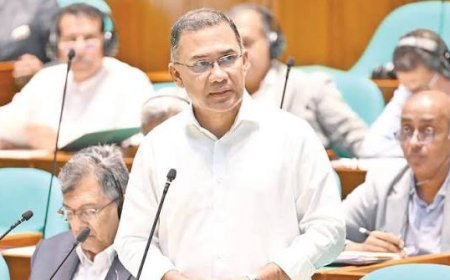
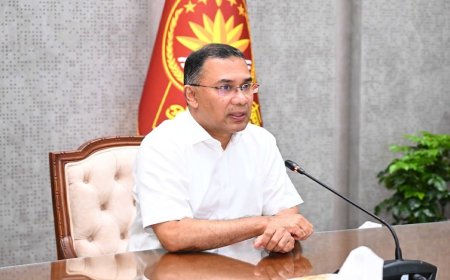
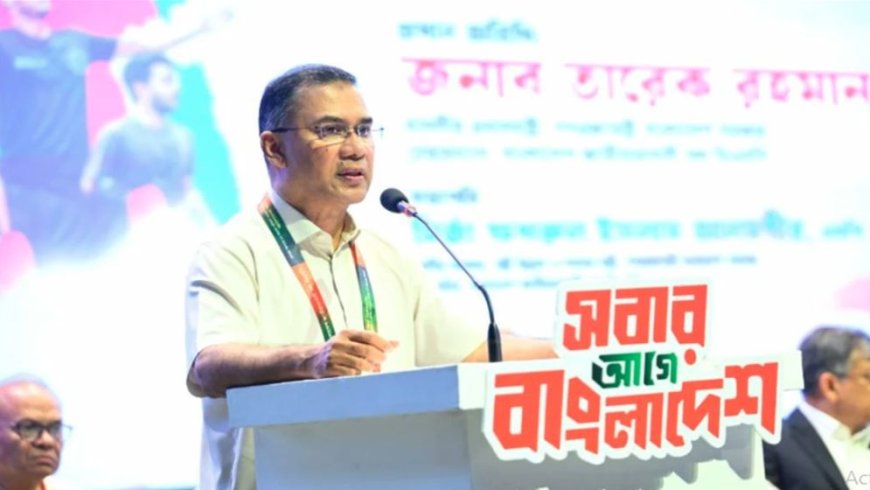
Prime Minister Tarique Rahman on Wednesday warned that efforts to create unnecessary controversy and instability in post-fascist Bangladesh could unintentionally aid the return of the ousted authoritarian regime, urging citizens to remain vigilant about the consequences of such actions.
Speaking at a discussion titled "July 36" after inaugurating the July Mass Uprising Memorial Museum at Sher-e-Bangla Nagar on the occasion of July Mass Uprising Day, the Prime Minister said the country must guard against actions that could undermine its democratic gains.
"Some are trying to create unnecessary issues and destabilise the country. We must consider whether such actions, knowingly or unknowingly, are helping the return of the defeated and fugitive authoritarian forces," he said.
Tarique Rahman formally opened the museum at Ganobhaban, the former prime minister's official residence near the Jatiya Sangsad Bhaban, around 9:00am. The museum has been established to preserve the legacy of the 2024 July mass uprising. Former interim government Chief Adviser Prof Muhammad Yunus attended the event as the special guest.
The Prime Minister stressed that the museum should serve as a national institution documenting Bangladesh's democratic struggles rather than promoting the political narrative of any individual, group or party.
"The 2024 mass uprising did not belong to any one person or political party. Its true heroes are the democratic people of Bangladesh," he said.
He called for the museum to preserve not only the memories of the July-August 2024 uprising but also the broader history of the country's democratic movements. According to him, the museum should highlight the nation's sacrifices, courage and aspirations while educating future generations about both the struggle for democracy and the consequences of authoritarian rule.
Tarique Rahman said the museum should feature photographs, official documents, personal belongings of martyrs, testimonies from the injured, newspaper reports, graffiti, posters, cartoons, poems, songs, paintings and digital archives related to the July uprising. He emphasised that all exhibits should be based on verified facts, warning that politically motivated or exaggerated narratives could undermine historical credibility and create divisions.
He also proposed presenting exhibits in English and other international languages alongside Bangla to help foreign visitors better understand Bangladesh's democratic journey.
Paying tribute to victims of anti-fascist movements, the Prime Minister said thousands had faced enforced disappearances, abductions and repression during more than 15 years of authoritarian rule, while students, workers, women and children lost their lives during the July-August uprising. He expressed sympathy for the families of those killed and reaffirmed his government's commitment to ensuring transparent and impartial trials for crimes committed during the anti-fascist movement.
The Prime Minister announced that at least one institution in the hometown of every person killed during the anti-fascist movement over the past 17 years and the July uprising would be named in their honour.
Reiterating his earlier remarks, he said the 1971 Liberation War secured Bangladesh's independence, while the 2024 mass uprising protected that independence and the people's freedom.
He said injured July fighters are receiving free treatment at government hospitals, while critically injured victims are being sent abroad, including to Thailand, Singapore, Türkiye and Russia, for advanced medical care. According to him, 50 July fighters are currently undergoing treatment overseas, while more than 13,000 officially recognised July fighters are receiving monthly honorariums through their bank accounts.
Tarique Rahman added that the government has begun implementing its 31-point election manifesto and the July Charter signed at the South Plaza of Parliament as part of efforts to rebuild state institutions and fulfil the aspirations of those who sacrificed their lives.
Thanking architects, historians, researchers, museum experts, artists and others involved in establishing the museum, he expressed hope that Bangladesh would never again fall under authoritarian rule.
Following the inauguration, the Prime Minister toured the museum with Prof Yunus.
The museum showcases photographs of the July uprising, personal belongings of martyrs, letters, official documents, newspaper clippings, audio-visual materials and exhibits documenting enforced disappearances, state repression, attacks on political opponents, the killings during the 2024 uprising and the events leading to the fall of the previous government.
The programme began with the national anthem, followed by recitations from the Holy Quran and other religious scriptures. Family members of several July martyrs, including the mothers of Shariar Khan Anas and Abdullah Bin Jahid, along with July warrior Tabassum Parpti, shared their memories during the event.
Several ministers, senior government officials, lawmakers, diplomats, academics, members of civil society, families of the July martyrs, injured July fighters and foreign dignitaries attended the programme.
Former Prime Minister Sheikh Hasina left Bangladesh for India on August 5, 2024, following a student-led mass uprising. Ganobhaban was later transformed into the July Mass Uprising Memorial Museum under the interim government led by Prof Muhammad Yunus, which assumed office on August 8, 2024, to preserve the historical record of the uprising and its significance.
What's Your Reaction?