
































Bangladesh’s Unfinished Revolution: From Yunus’s Political Transition to BNP’s Politics of Retribution
Bangladesh’s Unfinished Revolution: From Yunus’s Political Transition to BNP’s Politics of Retribution

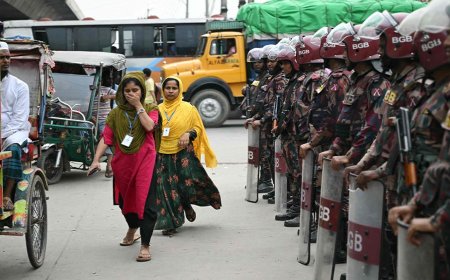
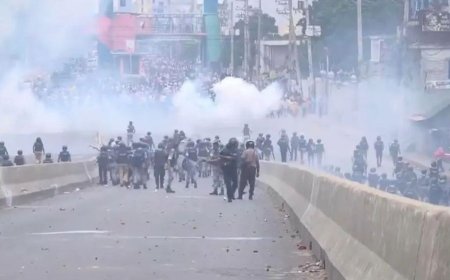
The July uprising promised to dismantle authoritarianism and usher Bangladesh into a new era of democratic freedom. Yet, Sheikh Hasina’s fall in August 2024 appears to have changed the occupants of power more than the nature of political contestation. Muhammad Yunus’s interim administration, once presented as the architect of democratic transition, eventually handed power to a BNP-led government in February 2026. But the promise of inclusion has collided with a different reality: Awami League leaders face arrests, garment workers take to the streets, and Shibir–Chhatra Dal clashes expose deepening fractures within the political landscape. The contradiction is striking: a movement that rose against political exclusion has been followed by renewed questions about who is permitted to participate in Bangladesh’s democracy. Has the country replaced one dominant political order with another, while leaving the underlying culture of power and retribution largely intact?
From Democratic Renewal to Political Vendetta
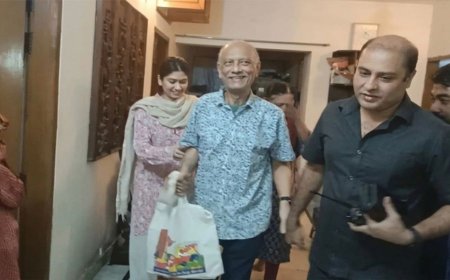
The political exclusion following Hasina’s removal increasingly resembles a cycle of retribution, raising questions about whether Yunus’s promised democratic transition dismantled authoritarian practices or merely transferred them to new political actors. In a 23 June 26 article marking its 77th anniversary, the Awami League described its members as facing imprisonment, fear and exile, accusing the interim administration and its successors of systematic persecution. Among the latest cases was former MP Mustaque Ahmed Ruhi, arrested on 23 Sept 26, upon his return and prosecuted over an alleged murder during the 2024 uprising.
On 05 Oct, Human Rights Watch documented the arrest of approximately 290 people supporters of a very different group after BNP activists identified them as an Awami League meeting. Again, a 28 July Human Rights Watch warning highlighted procedural flaws at the International Crimes Tribunal that could undermine genuine accountability. Subsequent death sentences against senior Awami League figures have intensified concerns over due process. When does accountability end and politically motivated persecution begin?
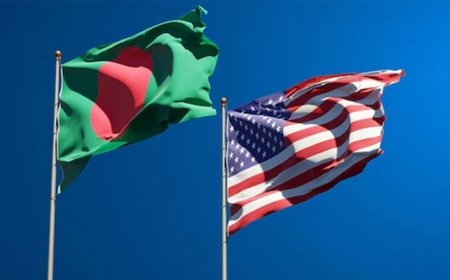
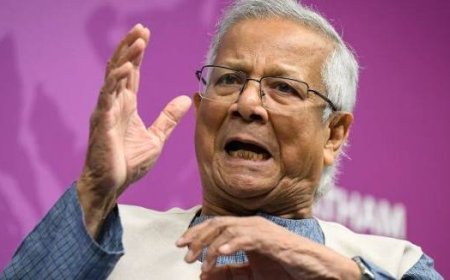
Jamaat-e-Islami’s role to help Muhammad Yunus assume leadership also deserves scrutiny. Its mobilisation and political agitation helped create the conditions for the dramatic transfer of power. Subsequently, the BNP emerged as a key political force supporting Yunus’s rise to the forefront, despite its own political ambitions. Numerous late-night meeting involving Muhammad Yunus, BNP leader Tarique Rahman and US Ambassador Brent Christensen. The repeated interactions between these three political actors invite scrutiny of their respective interests. Were these merely routine political consultations, or do they indicate a deeper convergence of objectives? While no formal alliance has been established, the pattern raises questions about whether Yunus, BNP and Jamaat are cooperating behind the scenes to shape Bangladesh’s political future.
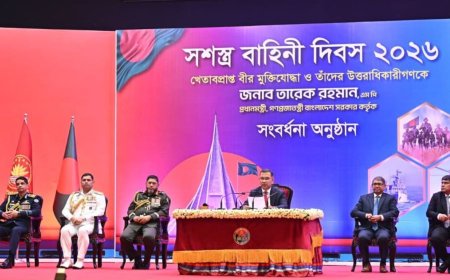
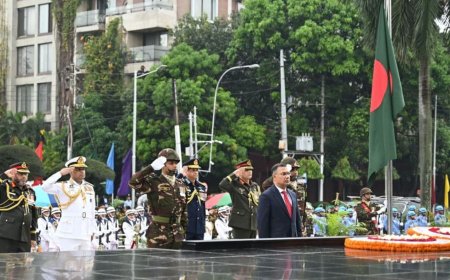
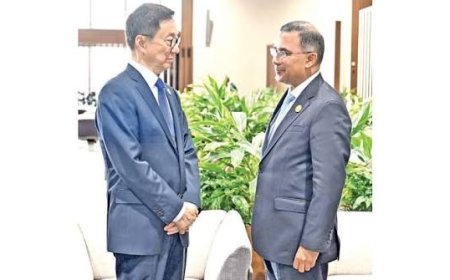
Was Bangladesh being readied for inclusive democracy, or was one establishment simply swapped for another? The subsequent relationship between Yunus and the BNP leadership has nevertheless acquired considerable political symbolism. On 5 Aug 26, Yunus joined Prime Minister Tarique Rahman at the inauguration of the July Uprising Memorial Museum, established in Hasina's former official residence, Ganabhaban. Their public appearance represented continuity between the interim administration and the elected government. For critics, however, it also highlighted how the political order born from Hasina's overthrow had come to be institutionalised while the Awami League remained excluded from mainstream political competition. The central concern is no longer merely who governs Bangladesh, but whether the political system can accommodate those who oppose its current rulers.
When Political Identity Becomes a Punishment
The most troubling dimension of this political transition is the concentration of consequential decisions in an unelected administration. By what democratic mandate did Muhammad Yunus's interim government oversee a process that resulted in former Prime Minister Sheikh Hasina receiving a death sentence? The Awami League was banned from political activities, its electoral registration suspended, and its historic boat symbol excluded from the 2026 electoral contest. This raises a fundamental contradiction: how can an administration claim to restore democracy while an entire political party is prevented from competing at the ballot box? Human Rights Watch’s Meenakshi Ganguly stressed that accountability must comply with international fair-trial standards, particularly regarding trials in absentia. Journalist David Bergman also questioned the exclusion of the Awami League, warning of its consequences for electoral representation. Meanwhile, Army Chief General Waker-uz-Zaman pledged military support for Yunus’s administration, raising questions about the military’s political influence. The central political contrast is stark: Sheikh Hasina sought to project Bangladesh as a sovereign state unwilling to surrender its strategic interests to foreign entities, while Muhammad Yunus's emergence as head of the interim administration raised questions about whether the country was entering a new era of Western influence. Hasina's resistance to alleged American ambitions over St Martin's Island and her refusal to accommodate certain US strategic interests became contentious features of Bangladesh's foreign policy. Then came the July uprising, which removed her government and brought Yunus, a figure with deep international connections and strong Western acceptance, to the centre of political power. This leaves to the question whether Yunus's interim administration initially operated within a political environment in which Jamaat had considerable access and an opportunity to influence the transition. However, as the political balance shifted, his engagement with Tarique Rahman became increasingly consequential, triggering an open disagreement with Jamaat over neutrality, political influence and the future direction of Bangladesh.
Ultimately, the question is whether Bangladesh gained greater sovereignty or merely changed who exercises influence over its political and economic future. The marginalisation of religious minorities that started under Yunus’s administration raises serious concerns about majoritarianism and exclusionary politics. Unlike Hasina’s secular governance framework, the interim administration has faced criticism over its failure to protect minority communities. Is Bangladesh witnessing a shift towards identity-driven politics at the expense of minority rights and pluralism?
Hasina’s Passport Controversy: A Test of Citizenship, Justice and Democracy
Sheikh Hasina’s reported attempt to obtain a new Bangladeshi passport and National Identity Card has evolved into a wider political and constitutional controversy. On 09 November 2026, lawyers representing her through London-based Matrix Chambers reportedly approached Bangladesh’s diplomatic mission in New Delhi seeking replacement documents after the revocation of her previous passport and identity card. Living in India since August 2024, Hasina has expressed her intention to return to Bangladesh in December and face legal proceedings, despite receiving a death sentence in absentia for crimes against humanity relating to the 2024 crackdown. Dhaka rejected the passport request, insisting that her return should follow extradition procedures under the Bangladesh–India treaty. However, the government's own rhetoric has raised serious concerns about the assurances of a fair and safe return. State Minister for Foreign Affairs Humaiun Kobir publicly challenged Hasina to seek extradition, saying she should tell India to hand her over so that Bangladesh could execute her. International Crimes Tribunal Chief Prosecutor Md Aminul Islam similarly declared that she had no option but to face execution, while Law Minister M Asaduzzaman had earlier warned that she could be arrested immediately upon entering Bangladesh. The controversy has drawn international concern, with seven UK lawmakers, led by Conservative MP Bob Blackman, urging Foreign Secretary Ed Miliband to seek safeguards against Hasina’s execution, questioning how Dhaka can claim to welcome her legal return while senior officials publicly emphasise her execution before she can pursue legal remedies. It also questions the intentions of Bangladesh’s present government: Is its objective to deliver impartial justice, or to ensure the permanent political elimination of Sheikh Hasina and the Awami League? If the administration genuinely believes in the rule of law, why does its approach continue to invite international concerns over due process, political exclusion and judicial independence? A government confident in its democratic mandate should have nothing to fear from fair trials, political competition and independent scrutiny. Is Bangladesh’s interim government restoring democracy, or using accountability as a cover to consolidate its own political power?
What's Your Reaction?