

































Power Without Accountability: When Political Authority Meets Public Dissent
Power Without Accountability: When Political Authority Meets Public Dissent


History offers a stark warning about what happens when political authority escapes institutional accountability. Adolf Hitler's rise in Germany remains one of its most consequential examples. Appointed chancellor by President Paul von Hindenburg on 30 Jan 1933, Hitler dismantled democratic institutions through emergency decrees and the Enabling Act of Mar 1933, transforming an elected government into a totalitarian dictatorship responsible for the Holocaust and the devastation of the Second World War. Although contemporary political leaders cannot casually be equated with Hitler, the historical lesson remains unmistakable: when power becomes insulated from opposition, institutions lose their independence and fundamental freedoms become vulnerable, political authority can turn into an instrument of repression.
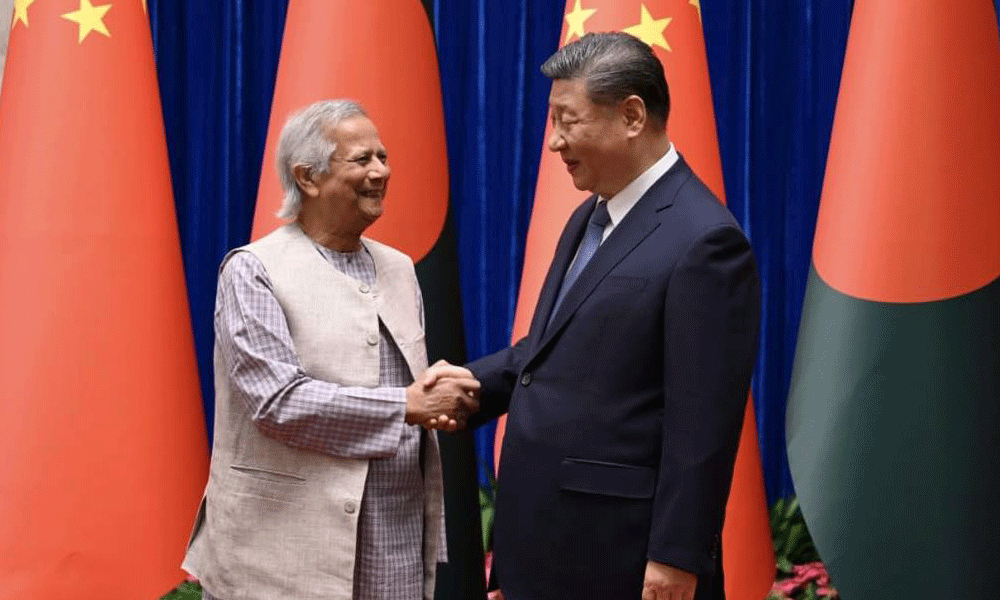
Across Bangladesh, Pakistan and China, a common thread emerges: political authority facing public dissent and demands for accountability. From Muhammad Yunus to Pakistan's military leadership and Xi Jinping, overseas protests have brought domestic political conflicts onto the international stage. These demonstrations do not necessarily represent majority opinion, but they expose something governments cannot easily control: the gap between the authority they claim and the confidence they command.
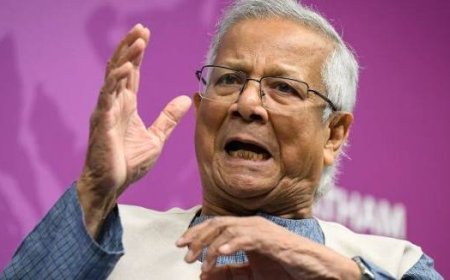
Bangladesh offers a particularly revealing example. On 13 Oct 26, interim government chief adviser Muhammad Yunus faced verbal harassment at New York's John F. Kennedy International Airport. Protesters accused him of undermining democracy, confronting him as he was escorted through the airport. Dhaka condemned the incident and sought US law-enforcement assistance to identify those responsible. State Minister for Foreign Affairs Humayun Kobir alleged that individuals who had fled Bangladesh were organising and financing activities abroad to destabilise the country. The government also suggested that people suspected of links to the banned Awami League were involved.
The deeper issue, however, is how Bangladesh's domestic political divisions have evolved into an international challenge to its leadership. Yunus's administration faced mounting criticism over political detentions, the banning of the Awami League, minority insecurity, mob violence and the resurgence of Islamist political activism. The European Union Agency for Asylum documented that 174 prisoners linked to militant organisations, including Jamaat-ul-Mujahideen Bangladesh, were released on bail between 5 August and 5 December 2024. On 7 Mar 25, Hizb ut-Tahrir, a banned organisation, organised a pro-caliphate rally in Dhaka that attracted more than 2,000 supporters, according to Singapore's RSIS. Meanwhile, the South Asia Terrorism Portal recorded 57 arrests of suspected Islamist extremists during 2025, including 47 members of Hizb ut-Tahrir. These developments raised broader concerns about Bangladesh's internal security, counterterrorism priorities and the potential regional implications of growing extremist activity, without establishing state complicity.
The Bangladesh Hindu Buddhist Christian Unity Council(BHBCUC) documented 2,442 incidents of violence against religious and ethnic minorities between 04 Aug 24 and 30 June 25. Its subsequent annual report alleged 522 incidents of communal violence during 2025, including 66 deaths and 95 attacks on places of worship. Separately, Ain o Salish Kendra recorded at least 197 deaths in mob violence during the same year. Although these figures reflect organisational monitoring and media reporting, rather than independently adjudicated findings, they underline the scale of the accountability challenge.A government cannot claim democratic credibility merely by invoking the democratic mandate of its predecessors' removal. If political detentions, insecurity, mob violence and restrictions on political participation remain unresolved, the question of accountability does not disappear with a change of administration. It simply changes hands.
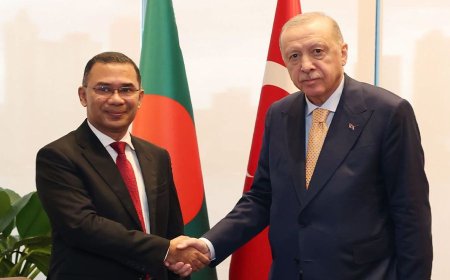
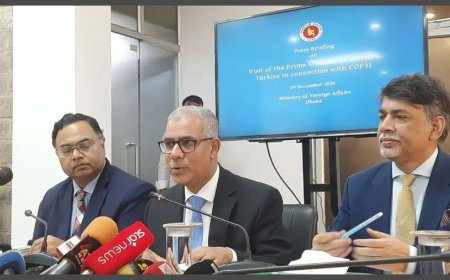
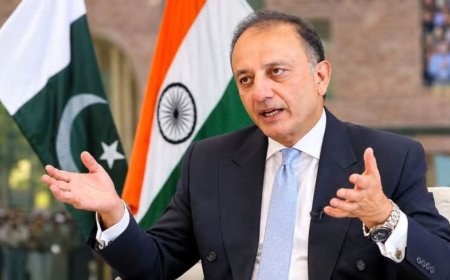
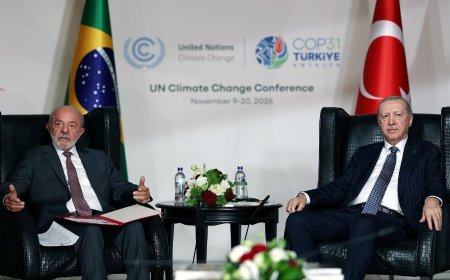
The political shift also brought a significant recalibration of Bangladesh's foreign relations. Under Yunus, Dhaka reopened diplomatic engagement with Islamabad, following his September 2024 meeting with Pakistani Prime Minister Shehbaz Sharif and expressions of interest in expanding bilateral cooperation. This engagement continued under the BNP government. On 11 Nov 26, Prime Minister Tarique Rahman met Sharif on the sidelines of the COP31 World Leaders' Summit in Antalya, Türkiye. While closer relations may offer economic and diplomatic opportunities, they also raise questions about how Bangladesh intends to reconcile renewed engagement with Pakistan against the historical sensitivities of 1971. A government seeking to redefine its international relationships must also recognise that historical memory and public accountability cannot simply be negotiated away.
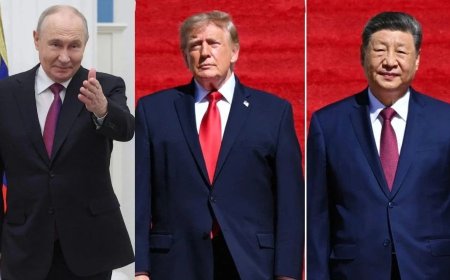
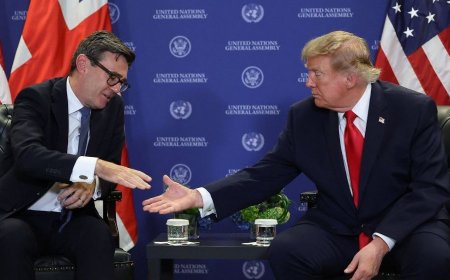
China presents another dimension of this growing international scrutiny. During President Xi Jinping's Washington visit on 24 Sept 26, Tibetan, Uyghur, Hong Kong and Chinese pro-democracy activists demonstrated against Beijing's human-rights policies. The Diplomat reported that more than 3,000 people participated in demonstrations during the visit, demanding political freedoms, religious rights and greater autonomy for affected communities. Former Tibetan parliamentarian Thondup Tsering declared, "He's not welcome here." Uyghur activists also urged US President Donald Trump to raise allegations of mass detention, cultural repression and human-rights violations in Xinjiang during his discussions with Xi.
While Xi received a formal White House reception, protesters challenged Beijing's policies outside, exposing the contrast between diplomatic engagement and international scrutiny. Pakistan presents a different challenge, where domestic political divisions intersect with civil-military relations and counterterrorism cooperation. On 14 June 2025, Pakistan Tehreek-e-Insaf (PTI) supporters protested outside Pakistan's embassy in Washington, demanding "unfettered democracy." Field Marshal Asim Munir arrived the following day for a five-day visit to strengthen military and strategic ties with the United States. Separate protests outside the Four Seasons Hotel accused the military leadership of political repression and human-rights abuses. The demonstrations highlighted Washington's delicate balancing act between security cooperation with Pakistan and concerns over its democratic governance.
Yet the response to overseas criticism raised questions of its own. In Feb 25, Information Minister Attaullah Tarar threatened legal action against individuals protesting and conducting social-media campaigns against Munir's UK visit. Earlier, in April 2024, the Associated Press of Pakistan reported Tarar's parliamentary remarks under the headline "No criticism on Pakistan allowed in Parliament." Such statements invite an uncomfortable question: when does criticism of a government or military establishment become an offence against the state?
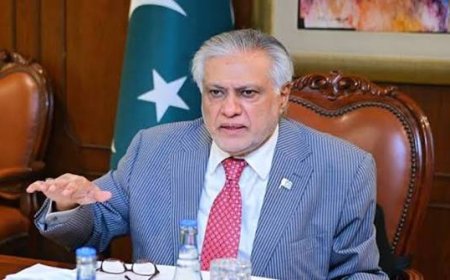
The controversy gained further prominence in Nov’25, when former prime minister Imran Khan described Munir as "the most tyrannical dictator in history" in a statement published through his official X account. Although Khan's remarks were political allegations rather than established findings, they underscored Pakistan's continuing civil-military tensions and raised a broader question about the space for political dissent: where does criticism of state institutions end and accusations of anti-state activity begin? Nor is this phenomenon new. In Oct 22, former finance minister Ishaq Dar was heckled by protesters at Washington Dulles International Airport, where demonstrators shouted "chor" as he arrived for meetings with the International Monetary Fund and World Bank. In June 23, former army chief General Qamar Javed Bajwa was confronted by an Afghan man while visiting Annecy, France. The individual accused Bajwa of human-rights violations in Afghanistan and supporting the Taliban. Those allegations were not independently established, but the confrontation demonstrated how controversies surrounding Pakistan's military and regional policies could follow its senior leadership beyond its borders.
Taken together, these incidents expose a political reality that governments increasingly struggle to manage: state authority can cross borders through diplomacy, but public grievances can cross them too. Leaders travelling abroad may receive ceremonial receptions, military honours and diplomatic assurances, yet demonstrations can challenge the image they seek to project. Diaspora organisations can mobilise opposition, lobby foreign legislators and bring allegations of political repression into international discussions. Their activities can complicate diplomatic engagements and place governments under scrutiny that domestic institutions may have failed to provide.
Overseas protests do not determine domestic legitimacy, just as government accusations do not invalidate dissent. Across Bangladesh, Pakistan and China, the same standards must apply: freedom of expression, peaceful assembly and political accountability. Ultimately, diplomatic recognition cannot replace public confidence, and political authority must withstand scrutiny rather than suppress it. Ultimately, the implications extend beyond individual leaders or isolated demonstrations. In an interconnected geopolitical order, domestic political legitimacy increasingly shapes how governments are perceived, engaged with and challenged internationally. Diplomatic recognition may strengthen a state's external standing, but unresolved domestic grievances can complicate bilateral relations, undermine international credibility and invite sustained scrutiny. The exercise of political power is therefore no longer judged solely within national borders; its consequences increasingly reverberate across the international system.
What's Your Reaction?