







































Dhaka Targets Rohingya Repatriation Within 18 Months: Humaiun
Dhaka Targets Rohingya Repatriation Within 18 Months: Humaiun

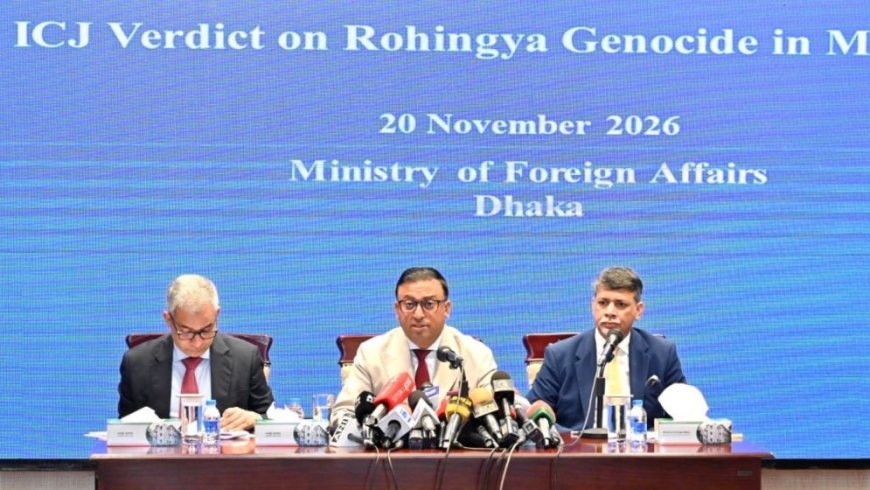
Bangladesh will intensify discussions with the United Nations and bilateral partners to facilitate the safe repatriation of Rohingyas to Myanmar within the next 12 to 18 months, State Minister for Foreign Affairs Humaiun Kobir has said.
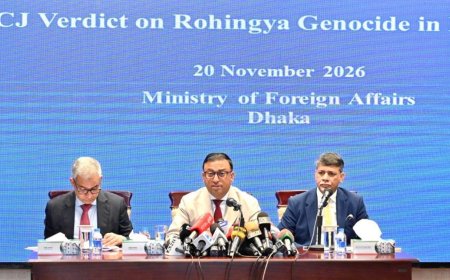
"We will pursue these discussions vigorously so that we can provide safe passage within a year to a year and a half," he told journalists at a media briefing on the International Court of Justice (ICJ) judgment concerning the Rohingya genocide.
Kobir said the landmark ruling had strengthened Bangladesh's legal grounds to demand safe and sustainable repatriation, as well as compensation for affected Rohingya communities.
Responding to a question on plans to accelerate the repatriation process, the state minister said the timeline would depend on establishing adequate safeguards in Myanmar's Rakhine State to ensure that Rohingyas could return safely and rebuild their lives.
He said Bangladesh would coordinate with UN agencies, key regional partners and other stakeholders to create the necessary conditions for a secure and dignified return.
In his prepared remarks, Kobir described early and sustainable repatriation as the only viable solution to the prolonged Rohingya crisis. He added that Dhaka would work through the United Nations and bilateral channels to secure compensation for affected communities.
Asked whether Bangladesh would pursue compensation through a bilateral arrangement with Myanmar, he said such efforts alone would not be sufficient, stressing that the process would require the participation of multiple countries and international agencies.
The state minister acknowledged that financial compensation could never restore the lives lost or erase the suffering endured by bereaved families. Nevertheless, Bangladesh would seek to persuade Myanmar to provide reparations and take necessary measures to help surviving family members return and rebuild their lives.
Kobir said Bangladesh would also use the UN framework to push for action on compensation if The Gambia, which brought the case against Myanmar, raised the issue before the UN Security Council.
On the possibility of deploying an international peacekeeping force in Rakhine State, he said Bangladesh would engage with a broader range of UN agencies and bilateral partners if the matter came before the Security Council. However, he did not commit to formally proposing such a deployment.
Explaining the significance of the ICJ ruling, Kobir said the court had held Myanmar responsible for committing genocide against the Rohingya population in Rakhine State.
He described the verdict as the first in the court's history in which a state had been found responsible for committing genocide.
According to Kobir, the court recognised the Rohingya as a distinct ethnic community with its own language, culture and identity. It also acknowledged how discriminatory legislation, restrictions and organised campaigns of hatred had gradually deprived the community of its rights over several decades.
He said the ICJ found that Myanmar had failed to prevent genocidal acts committed by individuals operating alongside its security forces and had not preserved evidence as required under the court's 2020 provisional measures order.
The ruling directed Myanmar to introduce effective laws to prevent genocide, halt ongoing violence and investigate individuals reasonably suspected of involvement in genocidal acts, bringing them to justice where appropriate.
It also addressed reparations for victims, including restitution and financial compensation, Kobir added.
He stressed that the judgment was final, legally binding on the parties involved and not subject to appeal.
Bangladesh, which currently hosts around 1.3 million forcibly displaced Rohingyas, had closely monitored the proceedings despite not being a party to the case, he said.
The state minister expressed gratitude to the government and people of The Gambia for filing the case on November 11, 2019, as well as the Organisation of Islamic Cooperation (OIC) and the 11 countries that submitted written declarations before the court.
He also recognised the Rohingya community's sustained efforts to seek justice and acknowledged the contributions of host communities in Cox's Bazar.
Kobir called on the international community to take prompt action to implement the ICJ judgment. He also urged development partners and donors to maintain humanitarian assistance for displaced Rohingyas and host communities in Bangladesh until the repatriation process is completed.
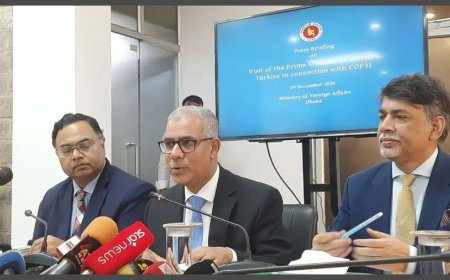
Foreign Secretary Salahuddin Noman Chowdhury and other officials were also present at the briefing.
What's Your Reaction?