














































Solar Power Investors Call for Lower Tariffs to Attract More Investment
BSREA also proposed that customers be allowed to pay the open-access tariff on a quarterly post-paid basis.


Solar power investors have urged the government to reduce the open access tariff for the first five years to encourage private investment in merchant power plants and accelerate renewable energy development in Bangladesh.
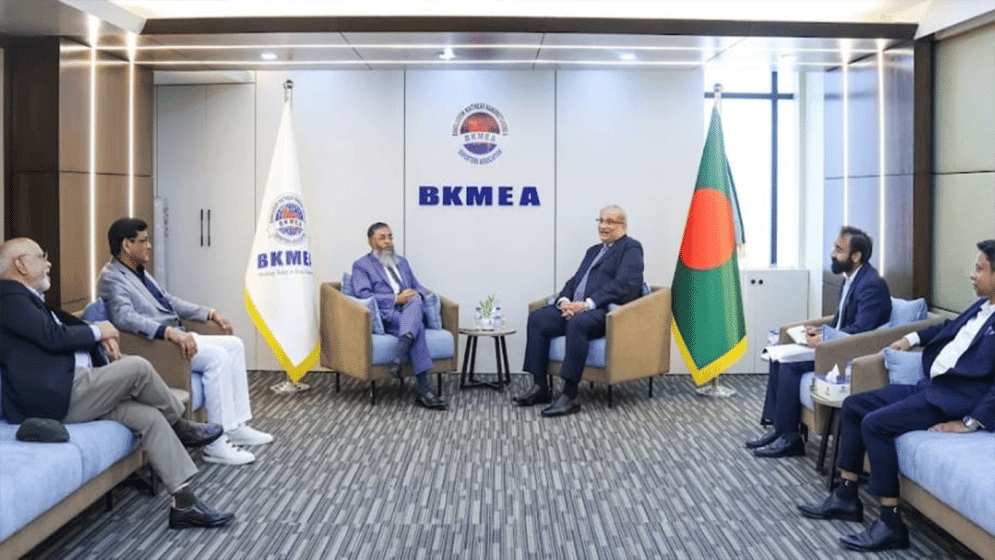
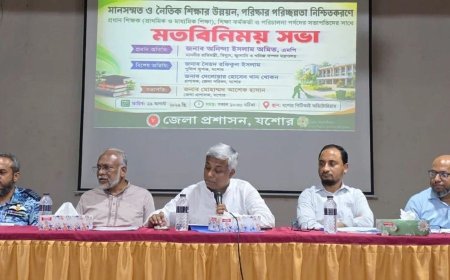
The Bangladesh Sustainable and Renewable Energy Association (BSREA), representing solar power plant owners, made the proposal at a public hearing on merchant power plant guidelines and tariffs organised by the Bangladesh Energy Regulatory Commission (BERC) in Dhaka on Sunday.
BSREA proposed setting the open access tariff at Tk0.50 for the first five years, arguing that the merchant power sector is still in its early stages and needs policy support to attract private investment.
BSREA President Mostafa Al Mahmud presented the association’s written recommendations at the hearing, attended by BERC Chairman Jalal Ahmed, commission members, renewable energy entrepreneurs and industry representatives.
According to the association, a lower initial tariff would encourage new investment in renewable energy while promoting greater use of clean power.
BSREA also called for compensation for deemed generation when electricity cannot be supplied to the grid because of faults or failures in distribution infrastructure. It proposed guaranteeing merchant power plants a minimum operating period of 20 years before closure or termination of agreements.
The association further sought priority dispatch for renewable electricity over other secondary sources.
Meanwhile, BERC’s technical evaluation committee recommended a generation tariff of Tk6.48 per unit for electricity produced by privately owned merchant solar power plants. Under the proposal, up to 20% of a plant’s output could be sold to distribution companies.
The committee estimated the plant’s net fixed assets at Tk326.08 crore and regulatory working capital at Tk44.72 crore, putting the total rate base at Tk370.08 crore. With a proposed 8.96% return, the profit component was estimated at Tk33.22 crore.
Personnel, repair and maintenance, administrative and general expenses were estimated at Tk11.21 crore, while depreciation was calculated at Tk15.33 crore. The total revenue requirement stood at Tk59.57 crore, falling to Tk59.47 crore after deducting Tk98 lakh in other income.
Based on estimated net generation of 91.84 million units, the committee recommended a tariff of Tk6.48 per unit.
It also proposed battery energy storage systems equivalent to 10–20% of the generation capacity of private solar plants. The systems would store excess daytime generation for use at night based on customer demand, improving supply reliability and supporting wider renewable energy adoption.
BSREA proposed that customers pay the open access tariff on a quarterly post-paid basis. It also called for surplus electricity from merchant plants to be supplied to public-sector utilities, with payments based on the average rate determined by BERC.
To strengthen investor protection, the association proposed a tripartite legal agreement involving the Ministry of Power, Energy and Mineral Resources, project developers and investors.
BSREA also recommended sharing transmission losses between the Bangladesh Power Development Board and the government and introducing fixed transmission charges based on different voltage levels.
On taxation, the association sought equal customs and tax exemptions for merchant power plants, independent power producers, and corporate and industrial solar users importing solar equipment and grid-connected infrastructure. It also proposed introducing SRO 400 to bring the applicable tariff down to zero.
The association further urged the government to intervene when an off-taker fails to make payments for electricity supplied by a merchant power plant.
BSREA said the new open access tariff framework presents both challenges and opportunities for Bangladesh’s electricity and renewable energy sectors. It argued that a stable, investor-friendly and long-term policy framework could help merchant power plants strengthen energy security, improve industrial competitiveness and support the country’s renewable energy targets for 2030 and 2041.
What's Your Reaction?