













































































Fossil Fuels Remain Absent from Latest COP31 Draft Agreement
Amid growing pressure over fossil fuels, Turkey and Australia proposed "electrification" as a strategy to reduce greenhouse gas emissions and strengthen energy security.

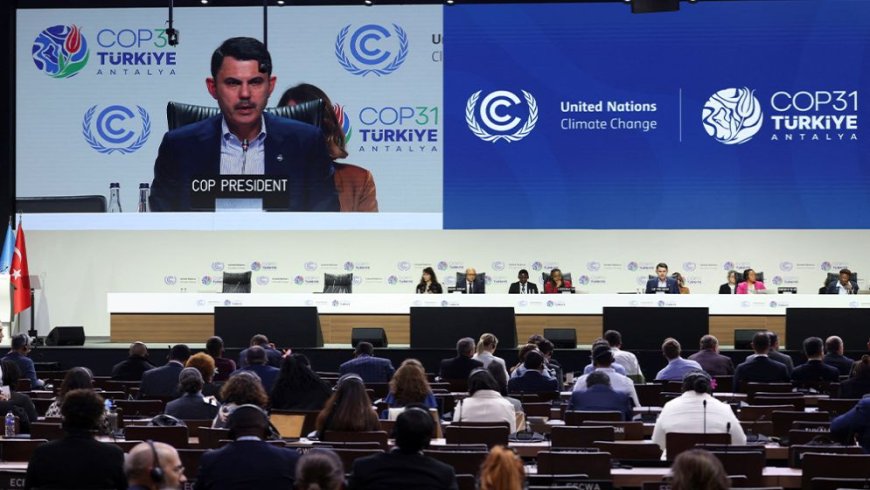
The COP31 presidency on Sunday proposed a last-minute agreement that once again excluded explicit references to fossil fuels, leaving one of the biggest obstacles to a consensus unresolved at the global climate negotiations in Turkey.
The revised draft, released well beyond the scheduled deadline, retains a proposal to electrify the global economy but makes no direct mention of fossil fuels. The omission comes despite strong criticism after references to fossil fuels were removed from an earlier version of the agreement.
Countries have struggled to bridge their differences at the annual climate summit, which is taking place amid rising energy prices and heightened geopolitical tensions linked to the war in Iran.
The deadlock over fossil fuels, the primary driver of global warming and one of the most contentious issues at the negotiations, has threatened to derail a final agreement in Antalya.
The latest proposal, jointly presented by COP31 co-hosts Turkey and Australia, refers indirectly to a 2023 agreement on transitioning away from fossil fuels but stops short of explicitly naming them.
However, it retains a target of increasing electricity's share of total final energy consumption to 35 percent by 2035, alongside measures to expand the use of clean energy.
Under pressure to address fossil fuel dependence, Turkey and Australia had promoted electrification as a means of reducing greenhouse gas emissions while strengthening energy security.
However, critics argue that replacing fossil-fuel-powered technologies, such as diesel vehicles and gas-based heating systems, with electric alternatives must go hand in hand with a transition to renewable energy sources.
The draft also calls for accelerating the deployment of carbon capture and storage technology, a controversial approach strongly supported by the fossil fuel industry.
Its inclusion in an earlier draft had drawn strong opposition from several countries, which questioned the technology's high costs and limited track record in reducing emissions.
What's Your Reaction?