


































PM Targets 35% GDP Contribution from SMEs by 2031
PM Urges Youth to Become Entrepreneurs Instead of Job Seekers, Targets 25 Lakh New Jobs Through CMSMEs by 2031

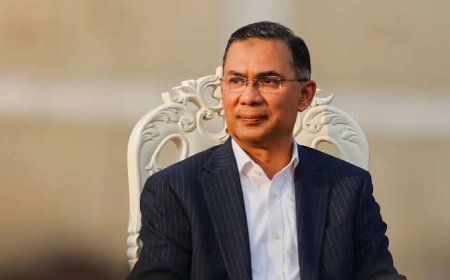
Prime Minister Tarique Rahman on Sunday said the government was working to transform Bangladesh into a manufacturing hub and an export gateway through a new SME policy, aiming to increase the sector's contribution to GDP to 35 percent by 2031.
“The draft National SME Policy 2026 has been prepared to translate this vision into reality, focusing on positioning Bangladesh as a manufacturing hub and an exporting gateway,” he said.
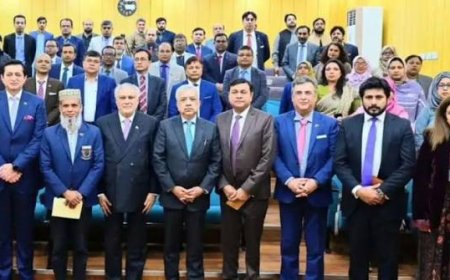
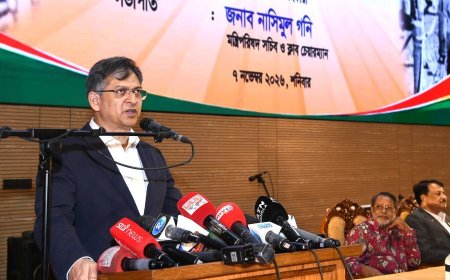
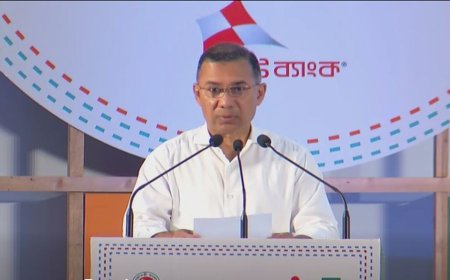
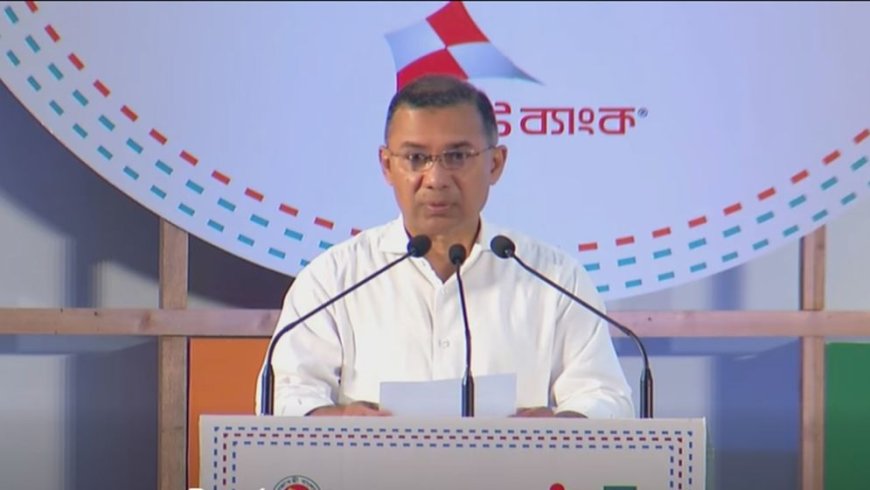
The Prime Minister made the remarks while inaugurating the seven-day 13th National SME Product Fair 2026 at the Bangladesh-China Friendship Conference Centre in the capital.
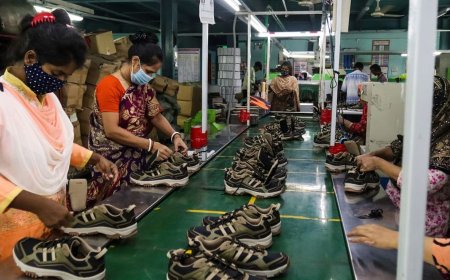
He urged local SME entrepreneurs to prepare themselves for international markets by diversifying their products, stressing that Bangladesh must move beyond its traditional reliance on the readymade garment sector and explore opportunities in leather goods, light engineering, agro-processing, plastics, handicrafts and information technology.
Tarique said the draft National SME Policy 2026 would soon be placed before the Cabinet for approval.
He said the proposed policy was designed to create a business-friendly environment in which cottage, micro, small and medium enterprises (CMSMEs) could make a greater contribution to developing a manufacturing-oriented economy and expanding Bangladesh's export base.
As part of the government's broader ambition to build a $1 trillion economy by 2034, the Prime Minister said it had set a target of generating 25 lakh new jobs through the CMSME sector by 2031.
“Through the implementation of the SME policy, we aim to raise the contribution of the cottage, micro, small and medium industries sector to GDP to 35 percent by 2031 and create 25 lakh new jobs,” he said.
He added that the policy would address evolving domestic and international economic conditions, technological developments, changes in global trade and the challenges Bangladesh would encounter after graduating from the Least Developed Country (LDC) category.
The government also plans to integrate SMEs into the country's wider industrial ecosystem, production networks and domestic and international value chains to help achieve the $1 trillion economic target by 2034, he said.
The Prime Minister stressed that small and medium enterprises should move beyond serving local consumers and become suppliers of machinery, components and other industrial inputs, while joining export-oriented manufacturing networks.
Bangladesh has already established its presence in international markets through the garment industry, he said, adding that the country must now expand its global footprint by promoting a broader range of products.
Referring to Italy's specialised industrial clusters, Tarique said Bangladesh could adopt a similar area-based production model by encouraging specific regions to specialise in particular products.
He described SMEs as a key driver of employment, poverty alleviation, women's economic empowerment and rural development, noting that several countries had achieved significant economic progress by strengthening their small and medium enterprise sectors.
However, he identified inadequate access to finance, limited use of modern technology, shortages of skilled workers and marketing difficulties as major obstacles confronting local entrepreneurs.
To overcome these challenges, the government was working with public and private sector stakeholders to facilitate loans, provide modern training and introduce necessary incentives for women and young entrepreneurs, he said.
The government also aims to train at least 50,000 entrepreneurs over the next five years in branding, digital marketing and e-commerce to strengthen their competitiveness in domestic and international markets.
Tarique emphasised the importance of developing strong national identities such as “Made in Bangladesh” and “Created in Bangladesh”. He also called for providing entrepreneurs with assistance in obtaining geographical indication (GI), trademark and design registrations.
To promote Bangladeshi products abroad, the government is considering organising international trade fairs in major global cities, including Singapore, London and Paris, allowing local entrepreneurs to display their products and secure overseas orders.
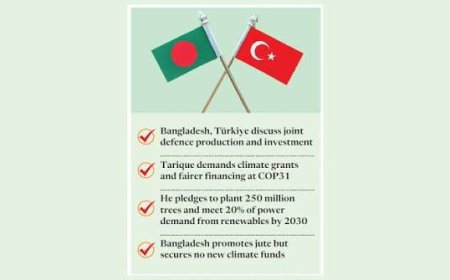
The Prime Minister cited Bangladesh's participation in the UN Climate Change Conference (COP31) in Türkiye, where jute-based products displayed at a stall attracted interest from foreign visitors and generated orders.
However, he noted that the entrepreneurs lacked adequate preparation and capacity to receive and process those orders.
He said the government would work to bridge such gaps by strengthening connections among entrepreneurs, financial institutions and international buyers.
Tarique also stressed the need to eliminate unnecessary bureaucratic procedures, administrative delays and additional costs that obstruct business operations. He said the possibility of introducing preferential tax arrangements for the sector would also be considered.
According to the Prime Minister, the SME Foundation has identified 177 potential industrial clusters across the country. The government intends to develop these clusters through initiatives such as “One Village, One Product” and the creative economy programme.
He also announced plans to establish a National Creative and Design Centre to assist entrepreneurs in improving product design, quality and packaging, making their products more competitive in international markets.
Highlighting the importance of entrepreneurship, Tarique urged young people to become job creators instead of limiting their ambitions to seeking employment.
Under the SME Foundation's “SME Srishti” programme, the government plans to develop more than 25,000 new entrepreneurs over four years by supporting 100 entrepreneurs annually in each of the country's 64 districts, he said.
The Prime Minister also underscored the need to increase women's participation in entrepreneurship, pointing out that women continue to face difficulties accessing finance, technology, training, business networks and distribution channels.
He reiterated that the government would work to connect small enterprises with larger industries, industrial supply chains and export-oriented production networks to help them expand their reach beyond domestic markets.
During the event, Tarique distributed the National SME Entrepreneur Awards 2026 among nine entrepreneurs.
Industries Minister Khandakar Abdul Muktadir presided over the programme. Finance Minister Amir Khosru Mahmud Chowdhury, FBCCI Administrator Md Fazlul Hoque, Industries Secretary and SME Foundation Chairperson Abdun Naser Khan, and City Bank PLC Managing Director and CEO Mashrur Arefin also addressed the gathering.
Around 380 enterprises from different parts of the country are participating in the fair, with women-owned businesses accounting for approximately 60 percent of the participants.
Organised by the SME Foundation under the Ministry of Industries, the fair will run until November 28.
What's Your Reaction?