
































Talking to the Correspondents: Nepal's Public Diplomacy Turn
Talking to the Correspondents: Nepal's Public Diplomacy Turn

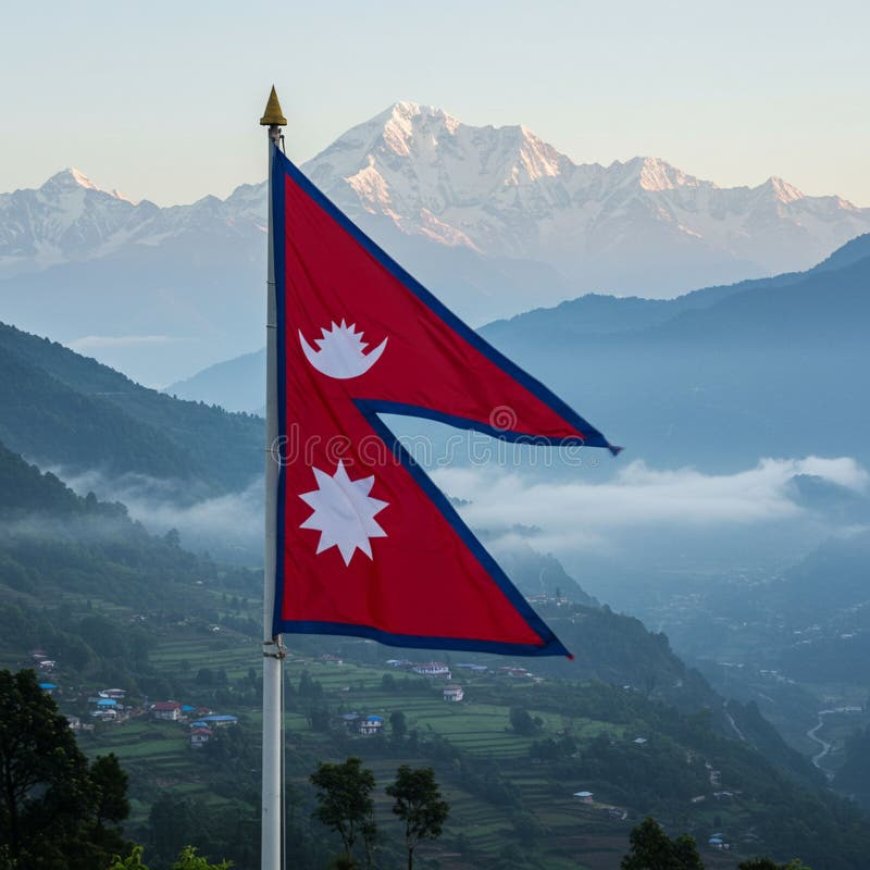
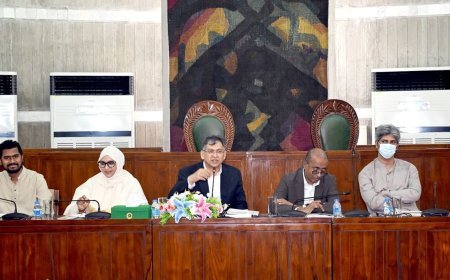
Sometime this summer, the Public Diplomacy Division of Nepal's Ministry of Foreign Affairs did something it had not done for a while. It sat its senior officials in a room at Singha Durbar with the foreign correspondents based in Kathmandu and let them ask questions. Durlav Roy Chowdhury, reporting on the meeting, describes it as "the first such broad engagement in several years". That phrase is the most revealing line in his account. A foreign ministry that has to reintroduce itself to the resident foreign press is telling you something about the previous several years before it says a word about the next five.
The substance, as Roy Chowdhury records it, was three priorities set out by the Foreign Secretary: protecting national interests, improving the country's international image, and using economic diplomacy to advance national objectives. The first and the third are unremarkable. Every foreign ministry says them. It is the middle one that deserves attention, because image has been promoted here from an outcome of policy to an object of it.
The audience that matters most is next door
An image strategy has to be aimed somewhere, and Nepal's is aimed, in the first instance, at India whether or not the ministry says so. India takes roughly two thirds of Nepal's merchandise trade, supplies its transit, sends the largest single share of its tourists, and shares an open border across which Nepali workers move without a visa or a work permit. Any programme built on investment, exports and jobs is going to be India-facing in practice, and the sooner that is said plainly the more coherent the programme looks.
The timing is favourable. Prime Minister Modi's invitation to the new Prime Minister went out on 27 March, the day the government took the oath, and a visit is being worked on at official level. On 10 August the Prime Minister broke his own protocol of meeting only counterparts and received the Indian ambassador at Singha Durbar, calling for a deeper historic relationship, before receiving the Chinese ambassador later the same day. Kathmandu analysts read the sequencing itself as the message. A government with a domestic mandate on jobs and clean administration, and without the inherited grievance politics of the older parties, has more freedom to treat the southern relationship as an economic file rather than a nationalist one.
This is where the ministry’s two priorities, image and economic diplomacy, actually converge. The substantive agenda with India is unusually concrete: power trade and the transmission that carries it, trade facilitation at the Tarai crossings and the potential for Nepali producers to reach third markets through India’s network of free trade and comprehensive partnership agreements. None of this requires a new doctrine but rather officials who are able to explain a decision promptly.
The friction in this relationship has often been about the space between a decision and its explanation, filled in by television on both sides of the border. A foreign ministry that briefs the resident press regularly, on the record, and shows up when the news is unfavourable, closes that space. Delhi wants a Kathmandu that expresses itself, as it is easier to work with than one that goes quiet and lets others narrate it.
The economic turn has an author, and that is new
Roy Chowdhury connects the ministry's economic emphasis to the Finance Minister's wider agenda on investment, international economic partnerships, and the link between domestic reform and external opportunity. The connection is the right one to draw, and it is worth being precise about why.
Economic diplomacy is not a new slogan in Nepal. The ministry has run a review mechanism with its missions abroad for years, complete with private-sector and Non-Resident Nepali representation, and every recent government has promised to convert embassies into trade offices. What has changed is that the finance portfolio now sits with a development economist who is also a deputy prime minister and a vice-chair of the governing party. Economic diplomacy in Nepal has usually suffered from having many sponsors and no owner. It now has an owner.
The problem is domestic, and no ambassador can solve it. Promoting investment abroad is hindered by land acquisition, power evacuation, contract enforcement, and policy instability at home. Despite holding investment summits, signing memoranda, and observing low conversion rates, Nepal’s real external economy remains remittances, worth about a quarter of its GDP. A foreign service that promotes reform before it’s implemented will be noticed by correspondents in the room.
The consular file is where reputation is actually made
The ministry's digital presentation, as reported, covered an application for citizens abroad, an electronic document-attestation system, and more than 45,000 passports delivered through a digitalised process. Read alongside the questions the journalists put about passport access and the treatment of migrant workers, this is the most substantive part of the meeting, and it is not really about image at all.
For most Nepalis, the foreign ministry is not a policy actor. It is a queue. It is the embassy that does or does not answer the phone when a worker in the Gulf is unpaid, injured, or dead. The ministry launched a consular services and emergency-assistance application in May this year for precisely this constituency. If the digitalisation holds, it will do more for how Nepal is seen, by the several million citizens who live outside it and by the states that host them, than any number of briefings. It also happens to be the part of foreign policy that maps most directly onto the governing party's domestic mandate on service delivery and clean administration. That alignment is a political asset, and the ministry appears to know it.
Misinformation is the wrong name for the India-China problem
The correspondents asked about the competing narratives surrounding Nepal's relations with India and China. Officials, by Roy Chowdhury's account, acknowledged the need for "faster communication and stronger mechanisms to address misinformation".
That answer shifts the focus from a structural issue to a communication challenge. The competing narratives arise from the genuinely difficult and contested position at home. Both relationships are used in Kathmandu’s factional politics. Some information is distorted, and correcting it quickly is crucial. However, much of it is simply argument, which attracts a contested policy. Faster communication won’t resolve it. Decisions will, which is why the order of the 10 August meetings was closely scrutinised in Delhi and Beijing.
What would count as evidence
Four things are worth watching over the next year.
Whether the briefings recur on a fixed schedule rather than as an occasional event. Whether the ministry appears when the story is unfavourable, not only when there is an application to launch. Whether the economic diplomacy mechanism publishes targets and results that missions can be measured against. And whether the consular digitalisation reaches the migrant worker in Doha or Kuala Lumpur rather than the applicant standing in Kathmandu.
Roy Chowdhury's own conclusion is the correct one and worth keeping: whether the changes "produce a lasting change" turns on how consistently the new practices are maintained. Consistency, in Nepali diplomacy, has been the scarce resource. Nothing about a young government with a large majority and a technocratic self-image guarantees it, though the same combination has produced worse odds before.
What's Your Reaction?