
































Garment Factories Resume Operations as Production Returns to Normal
Garment Factories Resume Operations as Production Returns to Normal

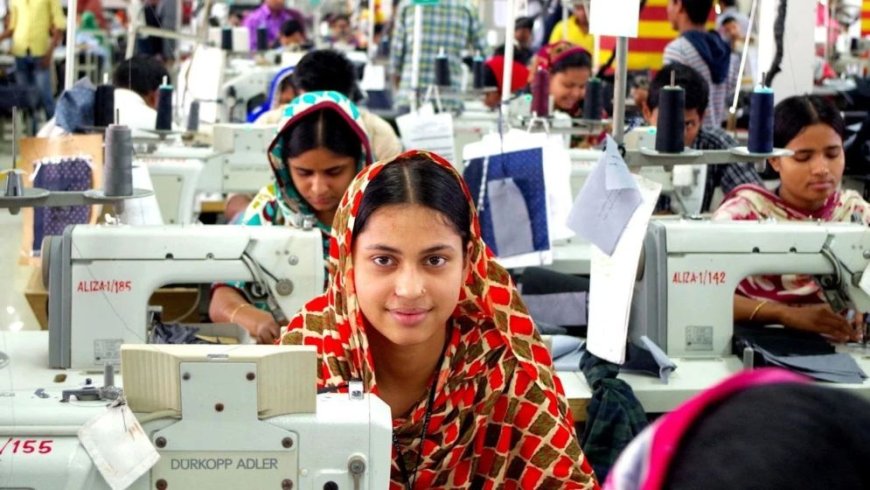
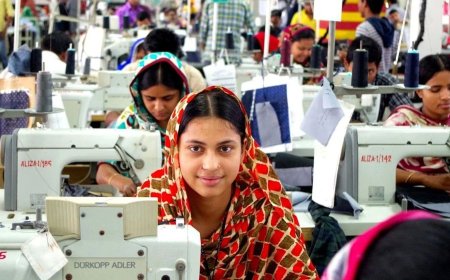
Production has returned to normal in garment factories across Bangladesh following the announcement of a revised minimum wage structure for workers, with operations resuming in major industrial zones.
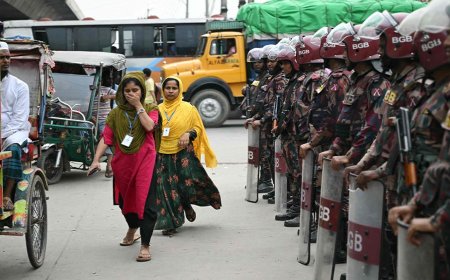
Most workers have returned to their workplaces, and factories in Ashulia, Gazipur, Narayanganj and other major industrial areas are operating normally, according to the Industrial Police.
Additional Inspector General of Industrial Police Israil Howlader told BSS on Saturday that the overall situation in the country's industrial zones remained normal.
"Most garment workers have joined their workplaces, and regular production is continuing in the factories," he said.
He noted that a few factories in the Banglabazar and Masterbari areas of Sreepur in Gazipur had declared holidays. However, the overall situation in Gazipur and other industrial areas had improved.
Israil said the situation in Ashulia had remained stable for several days, while tensions reported in Gazipur over the past few days had subsided by Saturday. No major problems had been reported in Narayanganj or other industrial zones, he added.
Referring to the country's nearly 10,000 garment factories, the Industrial Police chief said isolated incidents of worker unrest or temporary factory closures could occur at a few establishments due to delayed wage payments or other demands. However, such incidents should not be viewed as representative of the overall situation in the industrial sector, he said.
The government formed a new wage board for the garment sector on 1 November, with its first meeting held on 4 November.
After consultations with relevant stakeholders, the board finalised the revised wage structure through four meetings over 20 days.
On 25 November, Minimum Wage Board Chairman Syed Azad Subhani announced the new pay structure, increasing the minimum monthly wage for garment workers to Tk17,000 from Tk12,500. The Tk4,500 increase represents a rise of 36%.
Under the revised structure, the monthly gross salary of senior operators in Grade 1 has increased to Tk21,500 from Tk15,035, marking a rise of Tk6,465, or approximately 43%.
For Grade 2 operators, the monthly wage has been raised to Tk20,000 from Tk14,273, an increase of Tk5,727, or around 40%.
Similarly, the monthly wage for junior operators in Grade 3 has increased to Tk19,200 from Tk13,550, representing a rise of Tk5,650, or approximately 42%.
The minimum monthly wage for Grade 4 workers has also been increased to Tk17,000 from Tk12,500.
The revised wage structure will take effect on 1 December. Workers will receive their salaries under the new structure when factories disburse December wages in January.
What's Your Reaction?